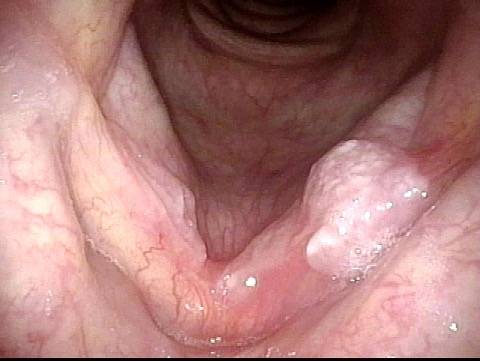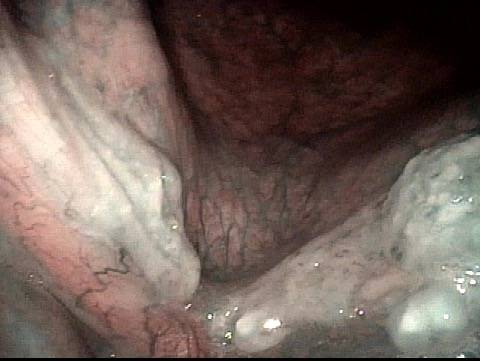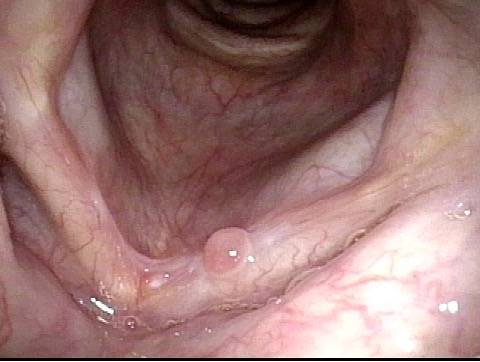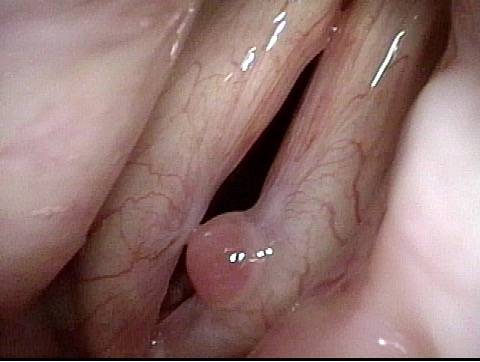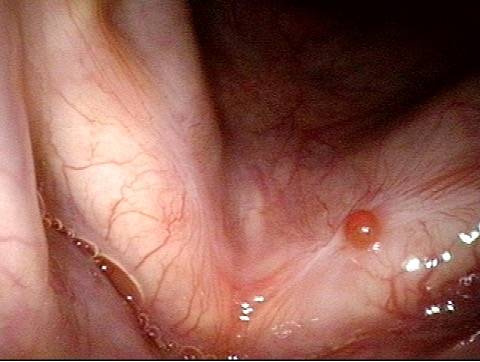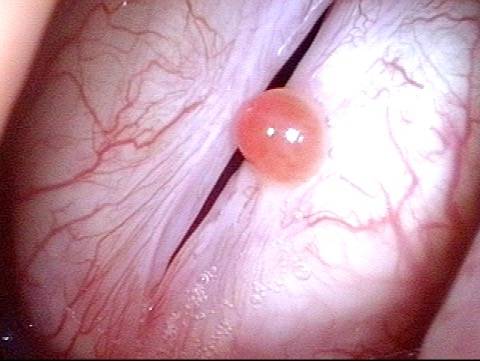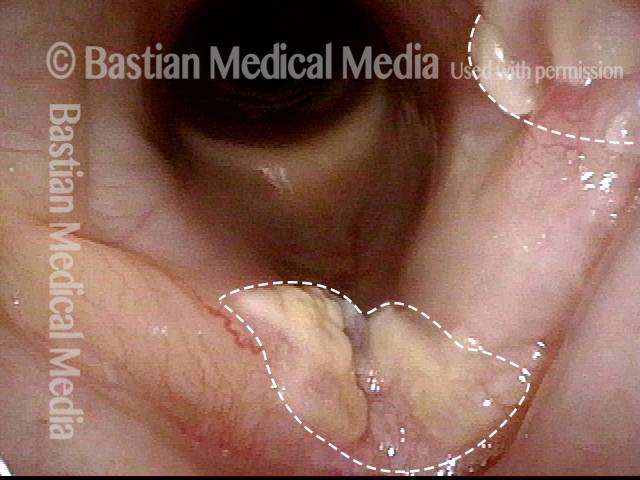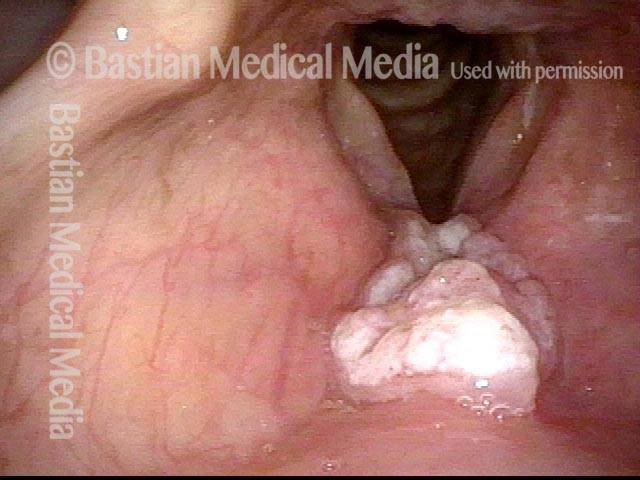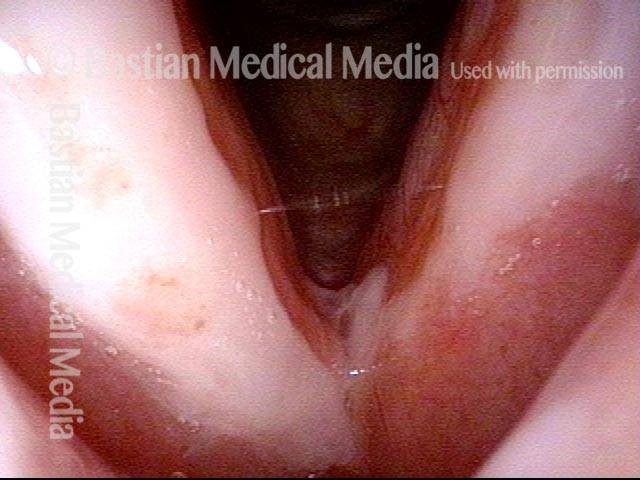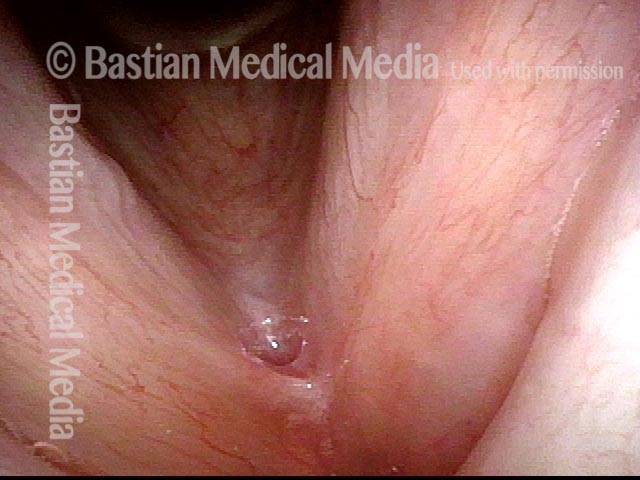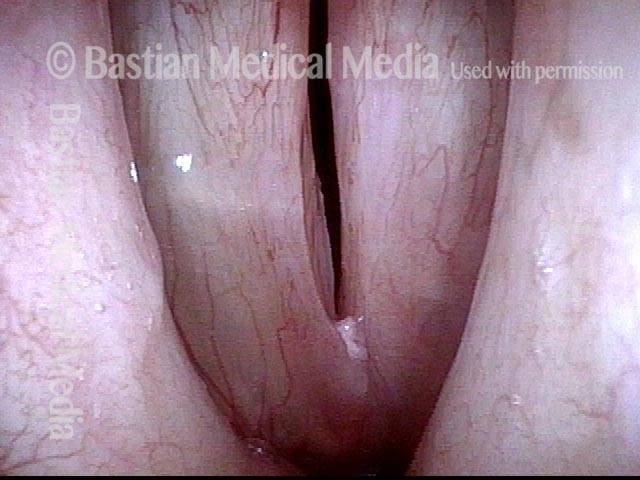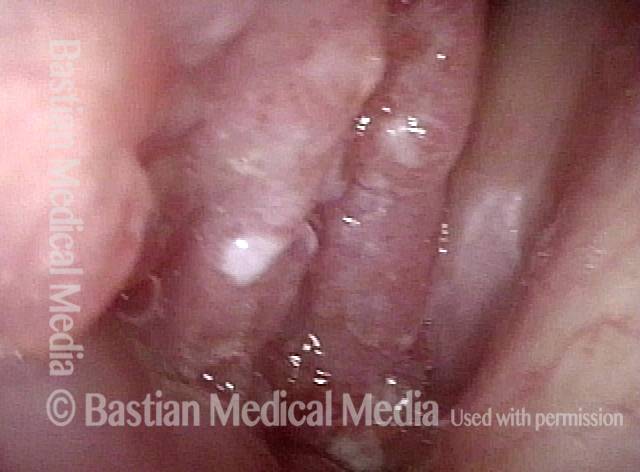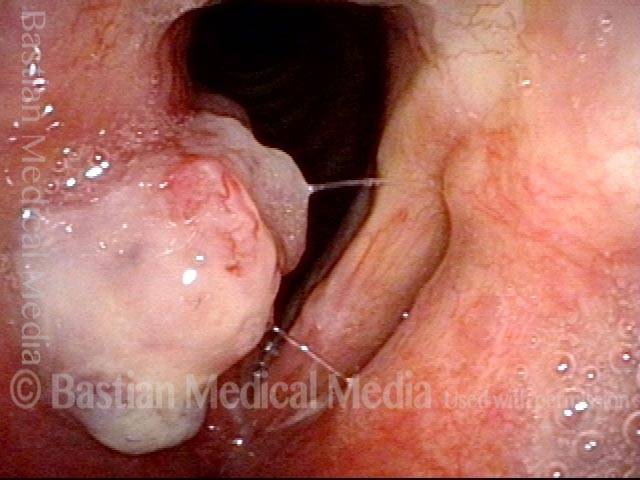

Cancer
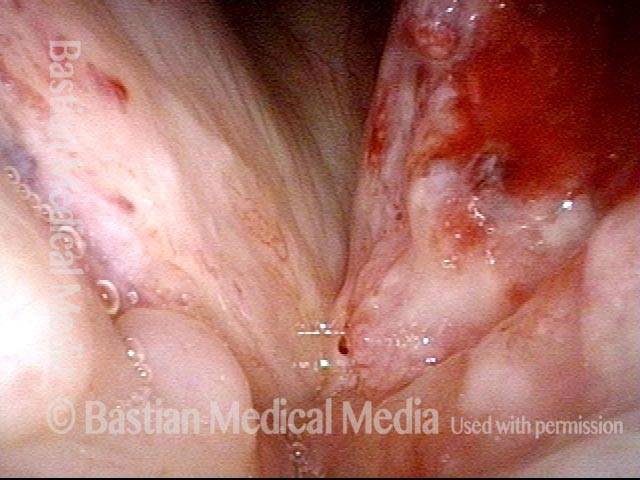
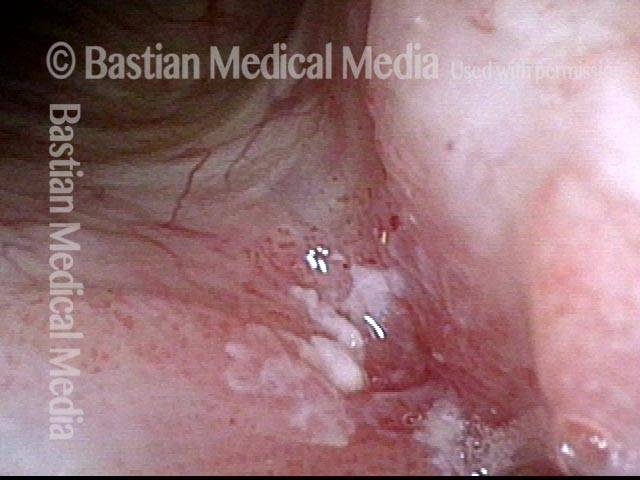
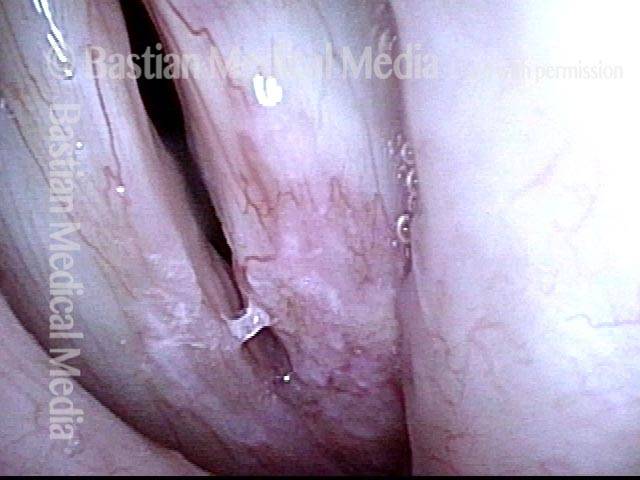
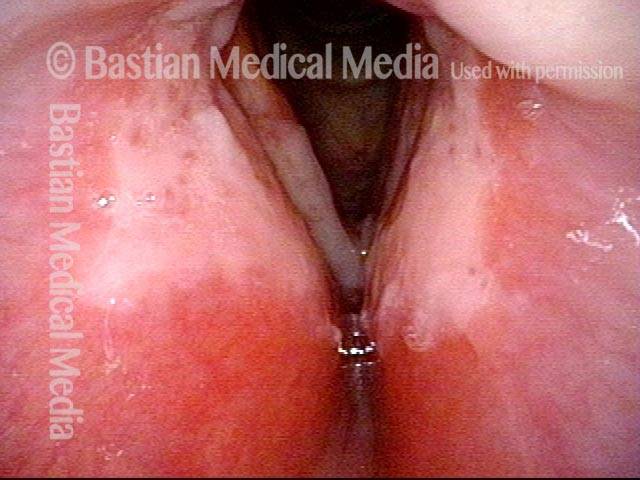
Cancer is a malignant growth or tumor caused by abnormal and uncontrolled cell division. The hallmark of cancer is its potential ability to invade neighboring tissue or to spread (metastasize) to other parts of the body through the lymphatic system or the bloodstream.
Early cancers may have done neither, remaining localized to the tissue of origin. The majority of cancers in the head and neck are classified as carcinomas.
Saving an Elderly Man from Repeated Trips to the Operating Room
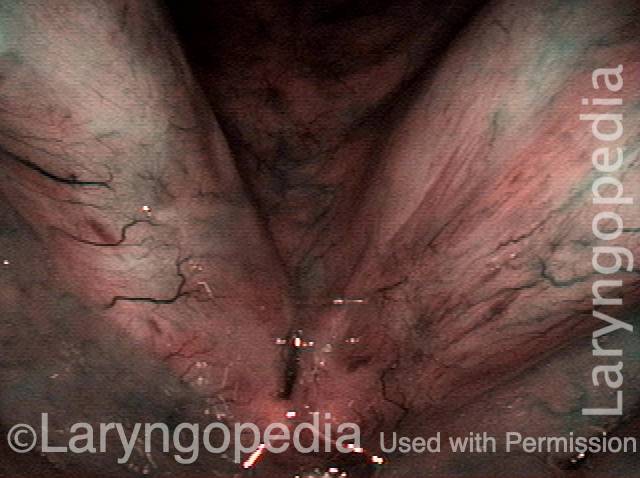
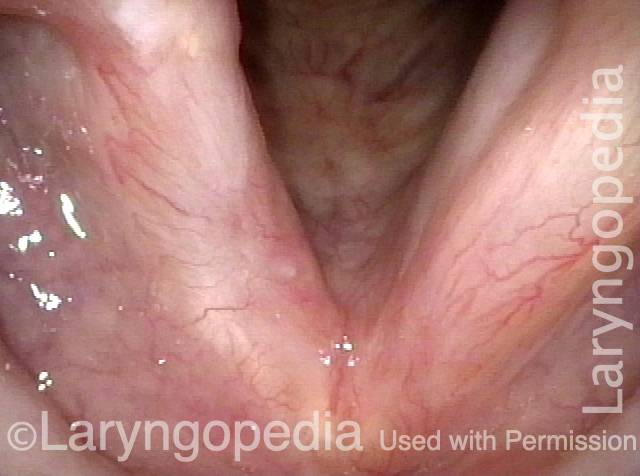
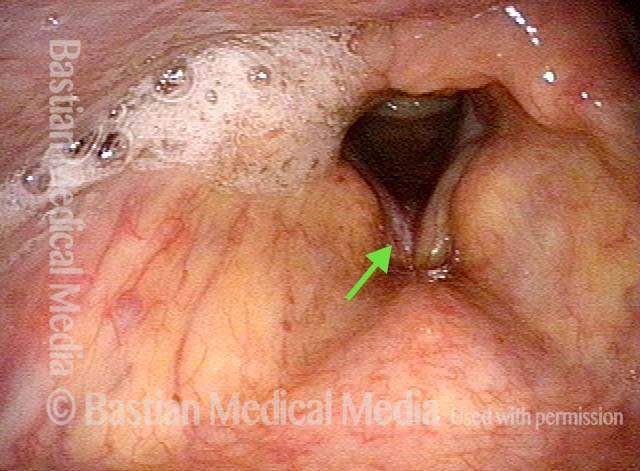
A 74-year-old man presented with unexplained hoarseness. He had a history of heavy tobacco use earlier in life but had stopped smoking 25 years prior. Laryngeal examination demonstrated stippled vascularity resembling that seen in recurrent respiratory papillomatosis, and the differential diagnosis included early laryngeal carcinoma versus HPV-related papilloma.
He was taken to the operating room for definitive excisional biopsy. Pathology revealed invasive carcinoma; however, excision margins were deemed adequate, and observation was elected rather than adjuvant radiotherapy. Early postoperative healing was excellent, and voice quality was well preserved
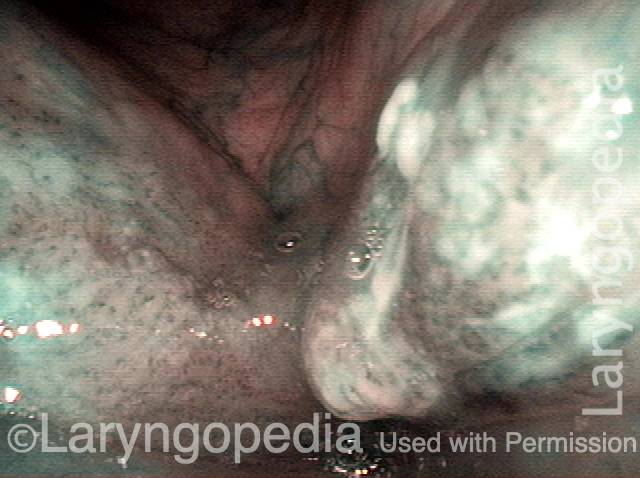
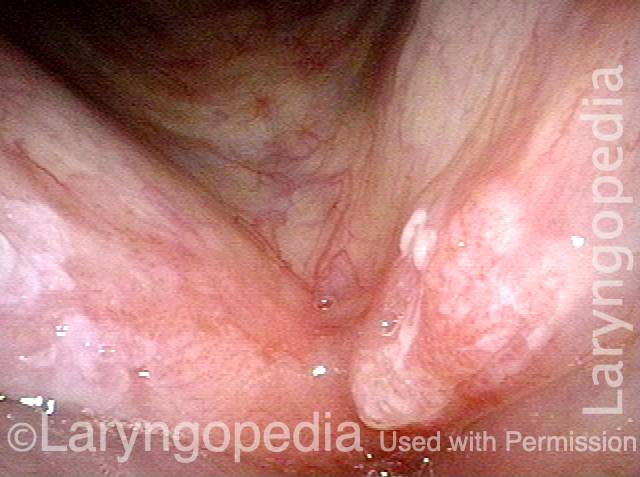
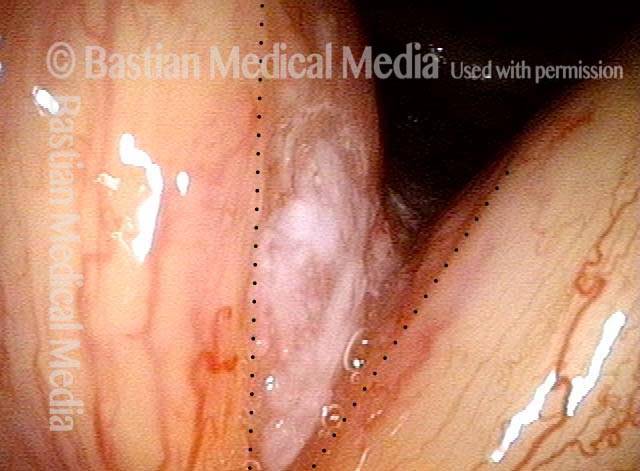
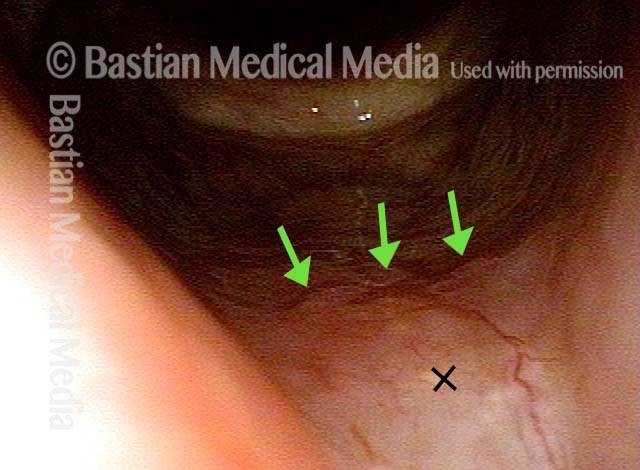
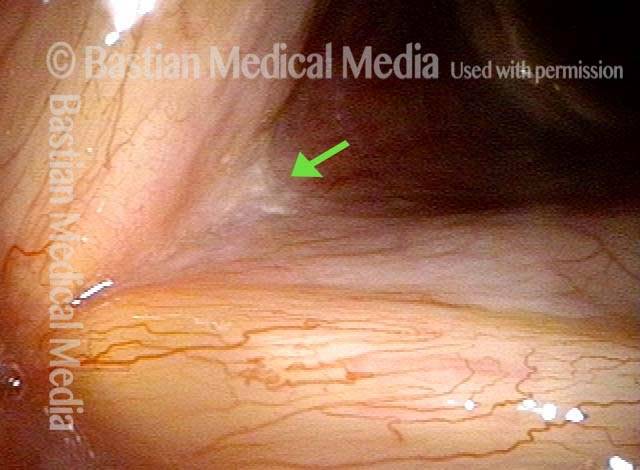
At eight months’ follow-up, a small white patch was noted at the prior site. Given his history of carcinoma, this finding required treatment. Instead of returning to the operating room, office-based laser coagulation was performed. Over subsequent years, several additional office laser treatments were required for small areas of recurrent leukoplakia.
This approach proved highly effective. It avoided radiotherapy and repeated operative interventions, preserved vocal function, and allowed the patient to attend treatments independently without the need for anesthesia or accompaniment.
T1 Laryngeal Cancer (1 of 15)
Narrow band imaging (2 of 15)
Inverted view in the operating room (3 of 15)
Excision in progress (4 of 15)
Excision complete (5 of 15)
Office exam, one week after excision (6 of 15)
During phonation (7 of 15)
Six weeks after surgery (8 of 15)
Match during voicing (9 of 15)
Recurrent abnormality (10 of 15)
Before laser coagulation (11 of 15)
Coagulation (12 of 15)
An example of his longterm result (13 of 15)
Under narrow band light (14 of 15)
At the moment of voicing (15 of 15)
Early Vocal Cord Cancer at Diagnosis, After Excision and Final Result
This middle-aged man became hoarse after an upper respiratory infection, and the hoarseness persisted. Examination revealed a right vocal cord lesion, and the leading diagnosis was early vocal cord cancer.
He was offered a simple biopsy for diagnosis only, with the understanding that if cancer were confirmed, a second trip to the operating room would be required should he choose laser excision rather than radiation therapy.
Given the strong likelihood of early cancer—but the possibility of a benign condition such as papilloma—the usual option was also offered: a biopsy via definitive excision, allowing both diagnosis and treatment in a single procedure, even though this might be slightly more aggressive than ideal for a benign lesion.
He chose the latter—a one-step diagnostic and therapeutic excision. The tumor was removed with “the width of the laser beam” as the margin. This approach succeeds almost always when the tumor is non-infiltrative, as it did in his case. Under operative magnification, the experienced surgeon can clearly discern the layered structure of the vocal cord and encompass a very narrow but complete margin around the tumor.
The concept parallels Mohs micrographic surgery in dermatology, with one key difference: while a thin secondary excision could be performed to verify margins, the seasoned laryngologist often trusts the visual completeness of excision, employing a “trust-but-verify” strategy through close postoperative surveillance.
After healing, the expected medial-to-lateral capillary reorientation was observed, and the patient’s voice—entirely functional though faintly rough—has remained stable and serviceable for more than ten years.
At initial evaluation (1 of 11)
Narrow-band imaging refines the working diagnosis of early cancer (2 of 11)
Mismatch during voicing (3 of 11)
Beginning of surgery (4 of 11)
After complete excision (5 of 11)
One week postoperatively. (6 of 11)
Phonation at one week (7 of 11)
After complete healing (8 of 11)
Closer view, standard light (9 of 11)
Strobe light, open phase of vibration (10 of 11)
Strobe light, closed phase of vibration (11 of 11)
Laser Removal of Vocal Cord Cancer with Bilateral Disease
For treatment of early vocal cord cancer, both laser excision and radiotherapy are in competition as good treatment modalities. See also Early Vocal Cord Cancer: Remove with a Laser, or Radiate? Often, radiation is used when disease is bilateral, in the interest of preserving voice.
This is an example of the ability to do fairly extensive laser surgery bilaterally, yet preserving good voice. This man had a friend who had severe difficulty with radiation, and he was therefore opposed to that option.
Vocal cord cancer (1 of 10)
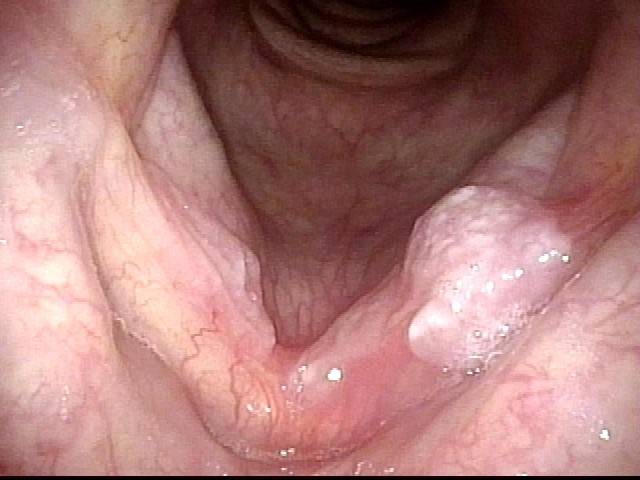
Stippling (2 of 10)
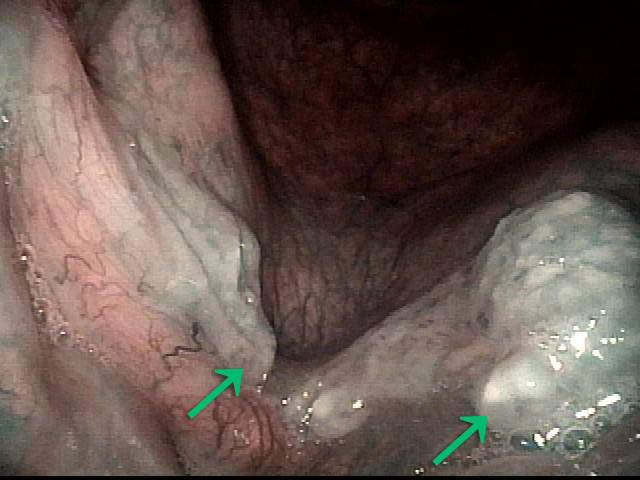
Stippling (2 of 10)
1 week after excision (3 of 10)
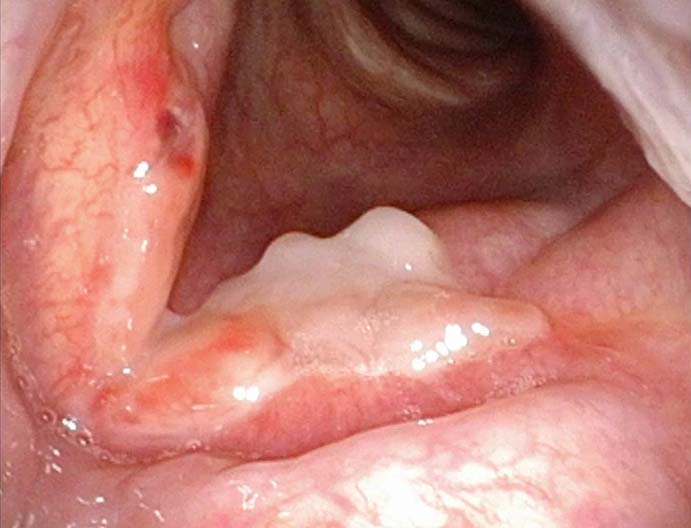
Reparative Granuloma emerges (4 of 10)
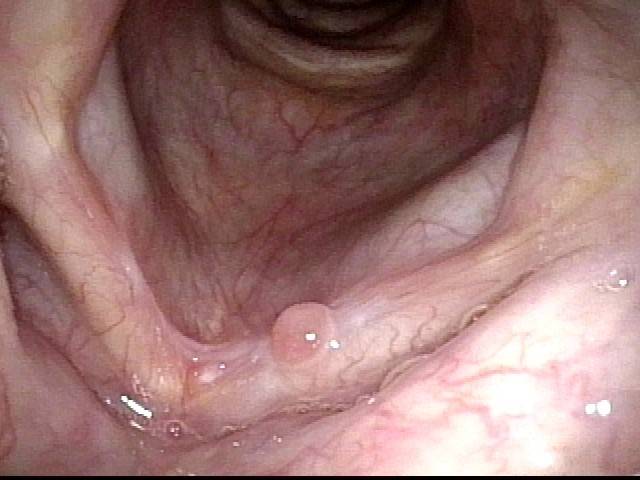
Granuloma interferes with voicing (5 of 10)
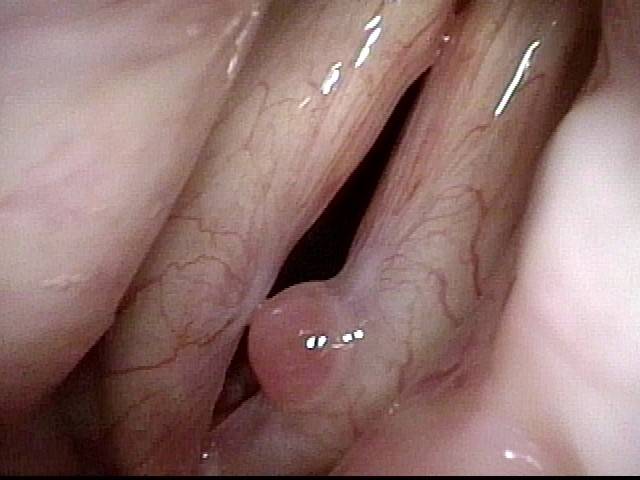
Granuloma fades away (6 of 10)
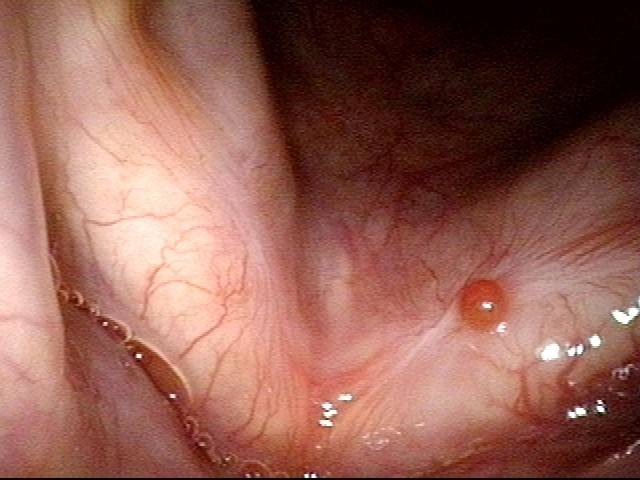
Closer view (7 of 10)
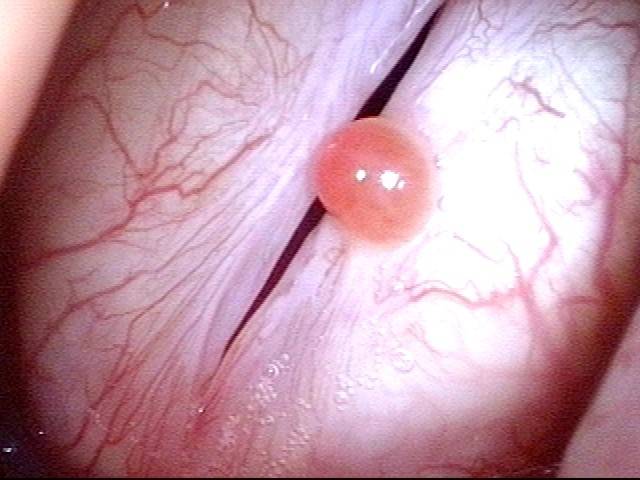
Granuloma cleft (8 of 10)
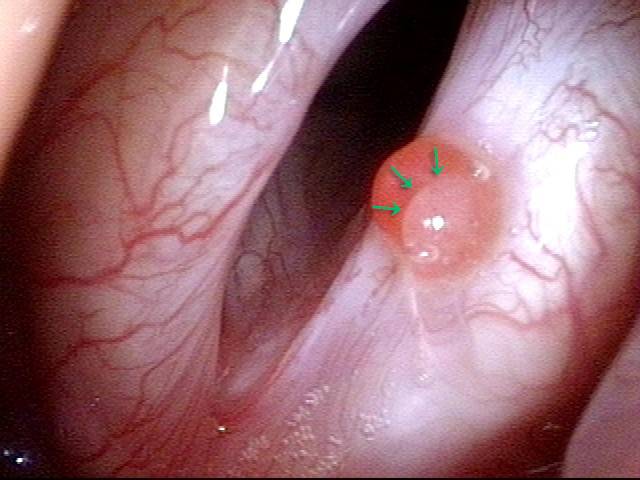
Blood tattoo (9 of 10)
Voice is improved (10 of 10)
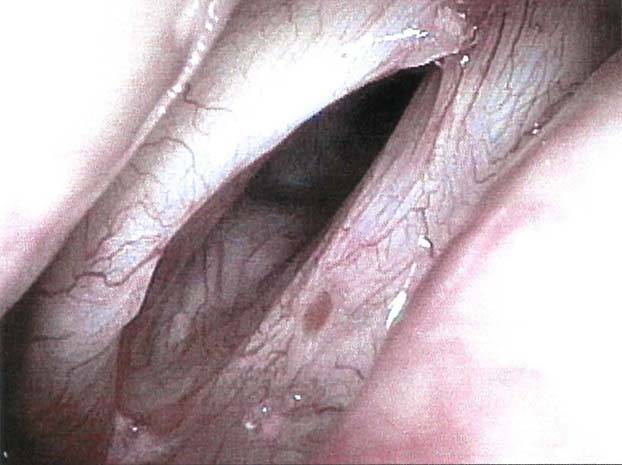
Vocal Cord Cancer, Before and After Surgery
Vocal cord cancer (1 of 8)
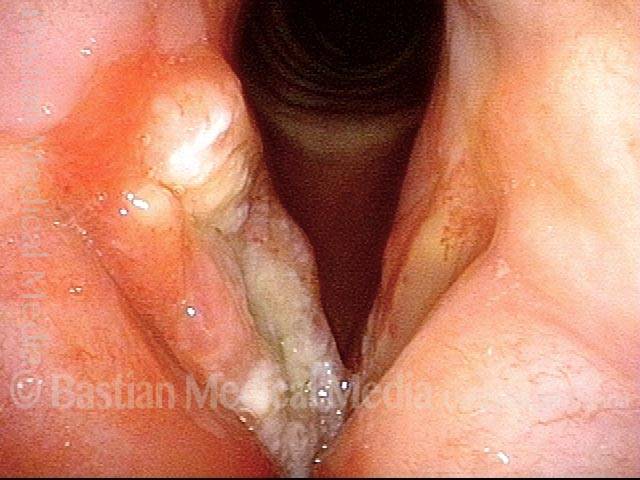
Vocal cord cancer (2 of 8)
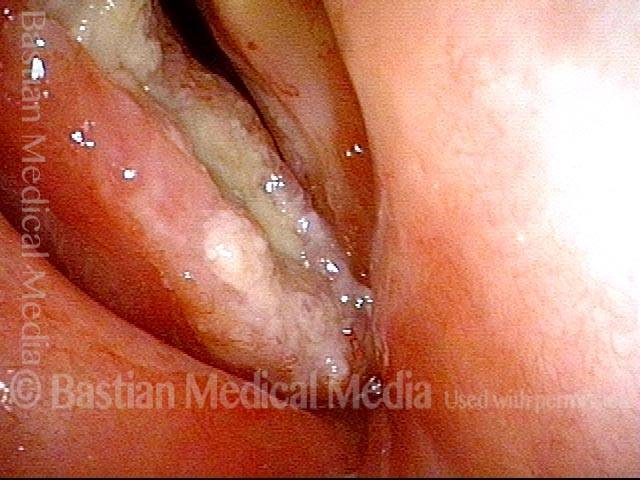
Vocal cord cancer, 1 week after surgery (3 of 8)
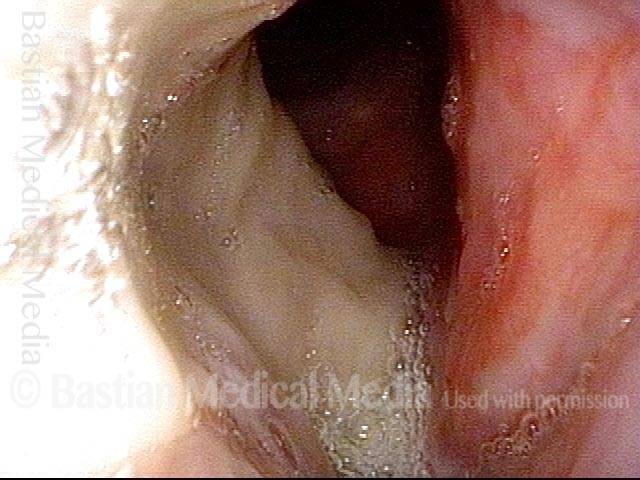
Vocal cord cancer, 1 week after surgery (4 of 8)
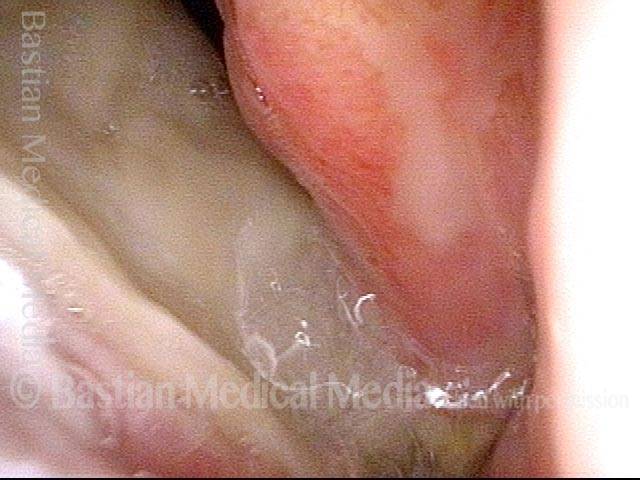
Vocal cord cancer, 7 weeks after surgery (5 of 8)
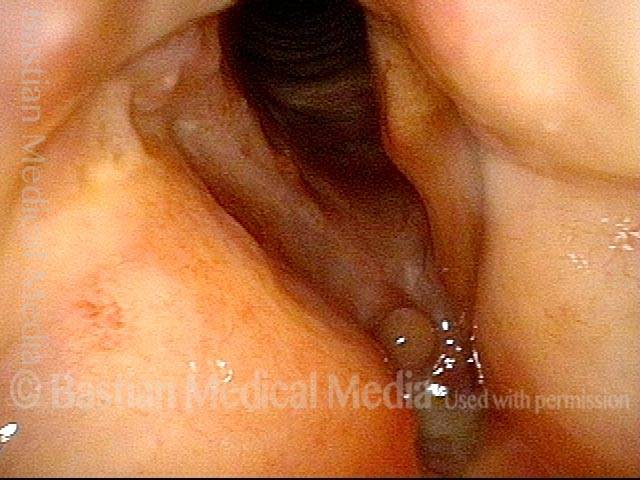
Vocal cord cancer, 7 weeks after surgery (6 of 8)
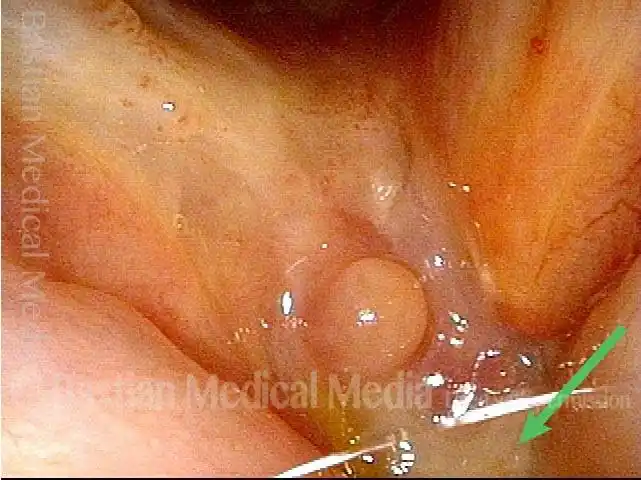
Vocal cord cancer, 7 weeks after surgery (7 of 8)
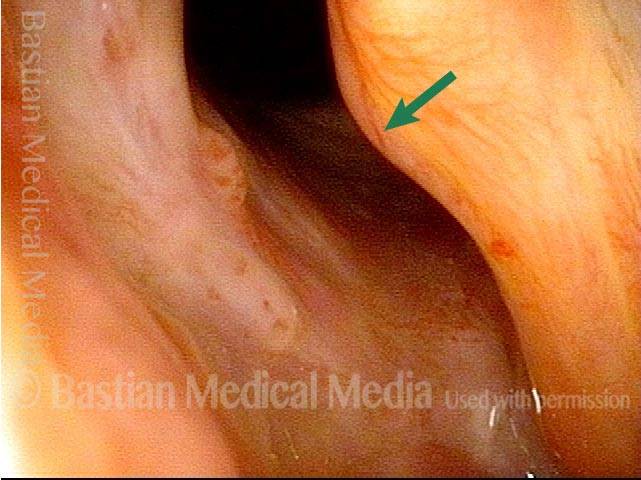
Vocal cord cancer, 7 weeks after surgery (8 of 8)
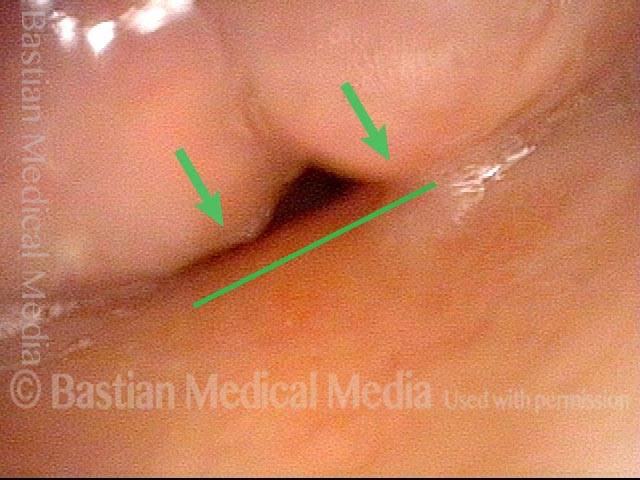
Example 2
Vocal cord cancer (1 of 4)
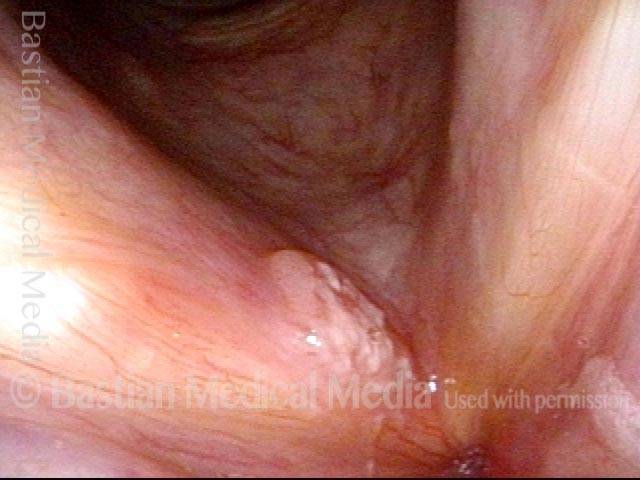
Vocal cord cancer, 1 week after surgery (2 of 4)
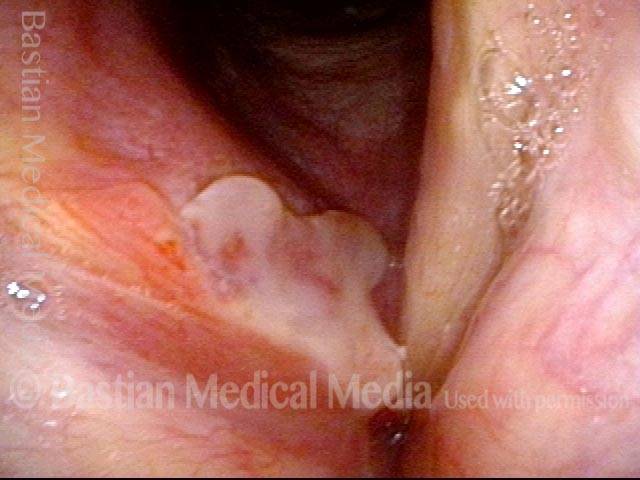
Vocal cord cancer, 1 month after surgery (3 of 4)
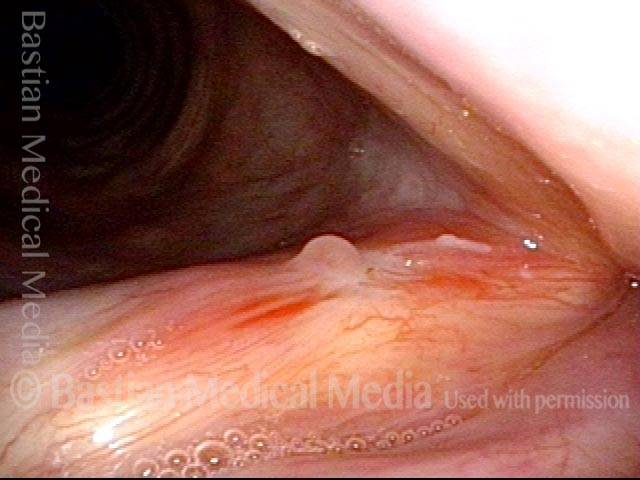
Vocal cord cancer, after complete healing (4 of 4)
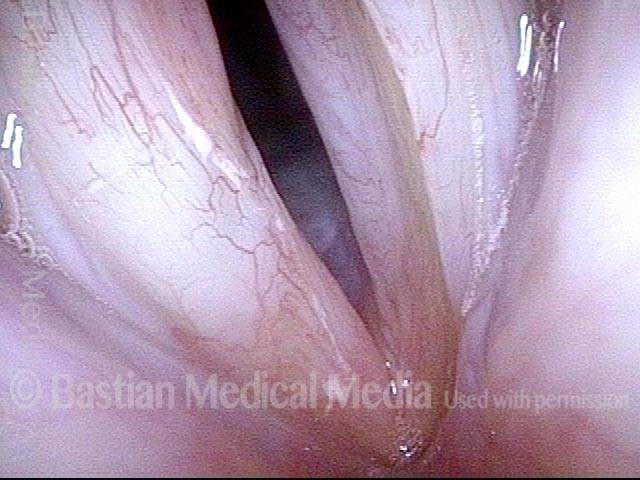
Glottic Cancer, Laser Removal
Glottic cancer, laser removal (1 of 3)
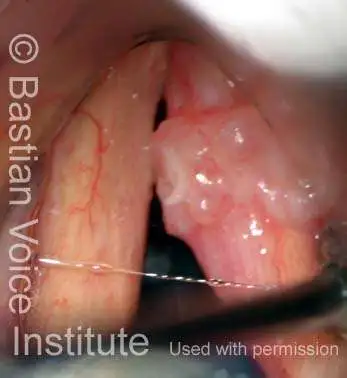
Glottic cancer, laser removal (2 of 3)
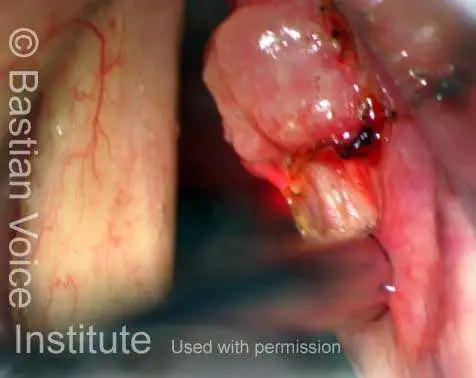
Glottic cancer, laser removal (3 of 3)
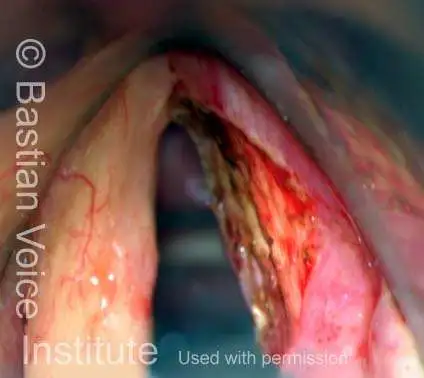
Glottic Cancer, After Surgery
Glottic cancer, after surgery (1 of 3)
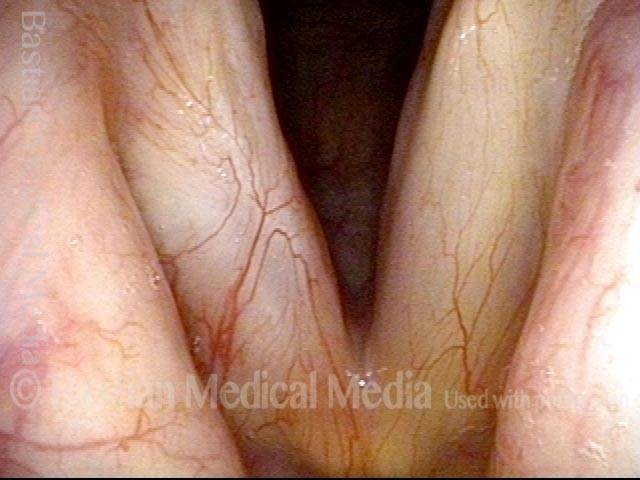
Glottic cancer, after surgery (2 of 3)
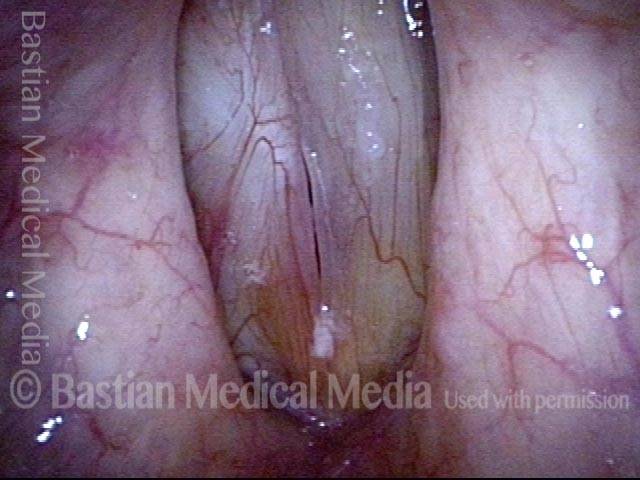
Glottic cancer, after surgery (3 of 3)
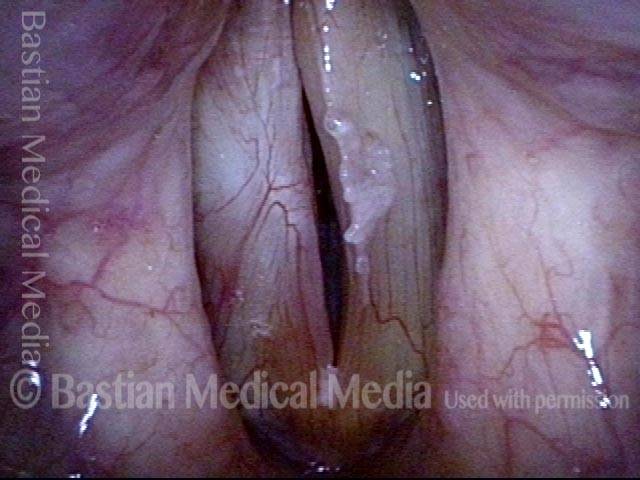
Breaking Cancer “Rules” Intelligently with Use of Laser
Post radiotherapy stage (1 of 8)
Laser surgery typically not acceptable (2 of 8)
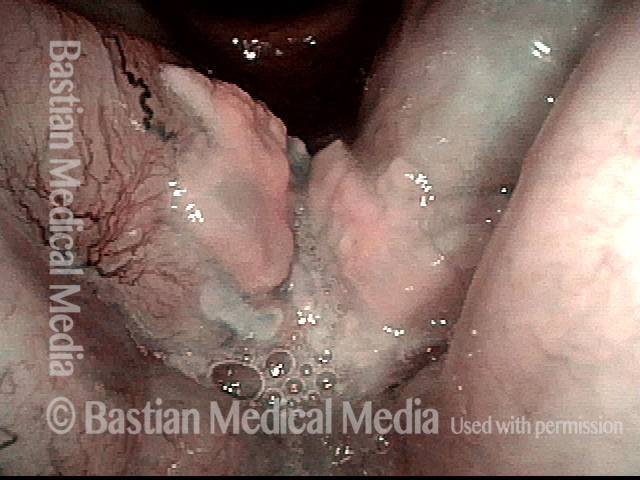
Laser removal of tumor with careful followup (3 of 8)
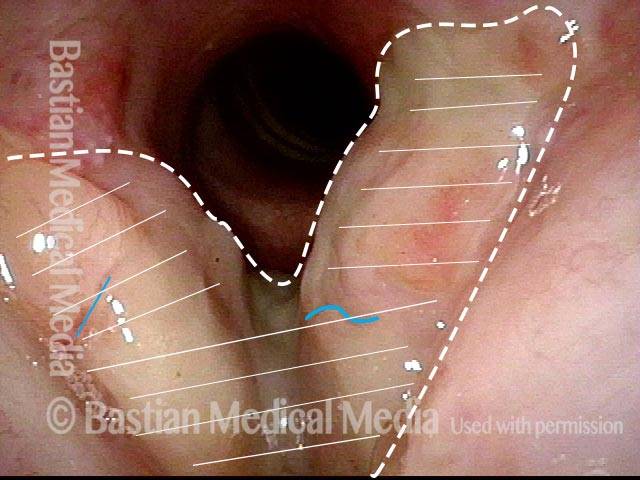
Second view post laser surgery (4 of 8)
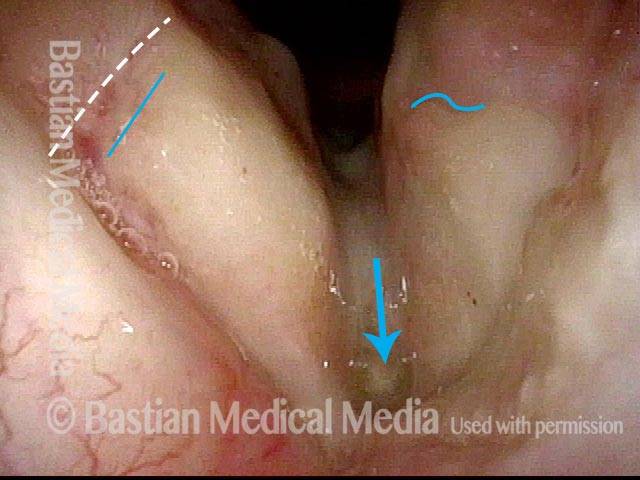
Six months post laser surgery (5 of 8)
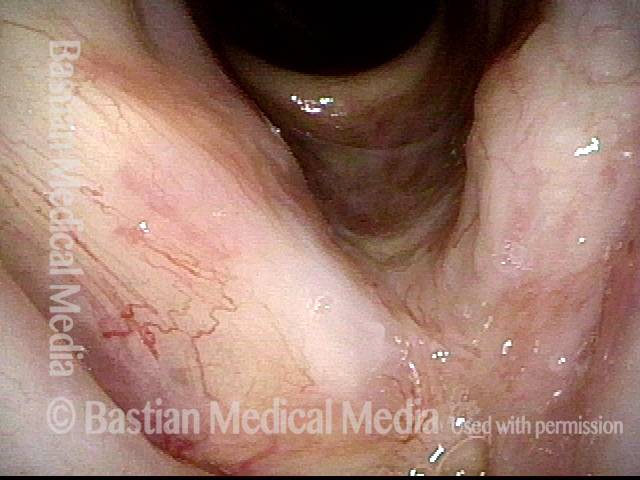
Blood vessels stable two months post surgery (6 of 8)
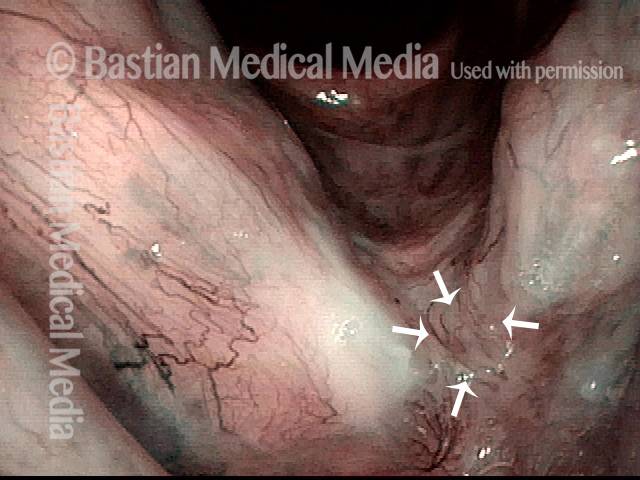
Open phase of false vocal cord phonation (7 of 8)
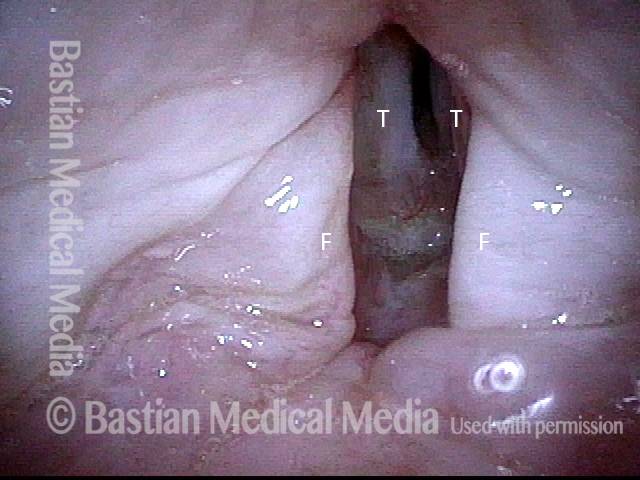
Closed phase of false vocal cord phonation (8 of 8)
Glottic/Vocal Cord Cancer
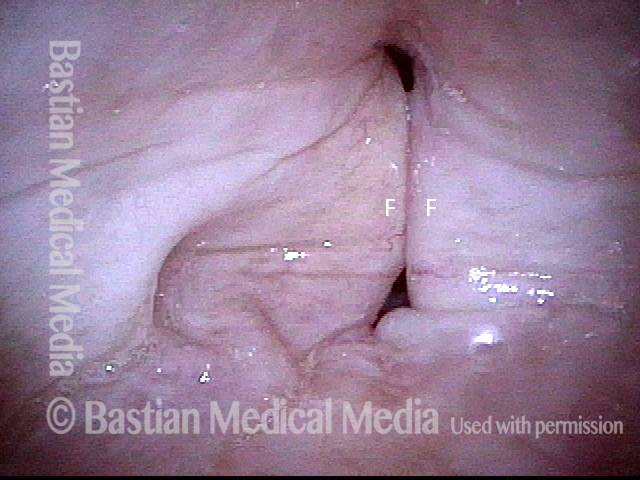
Glottic/vocal cord cancer (1 of 2)
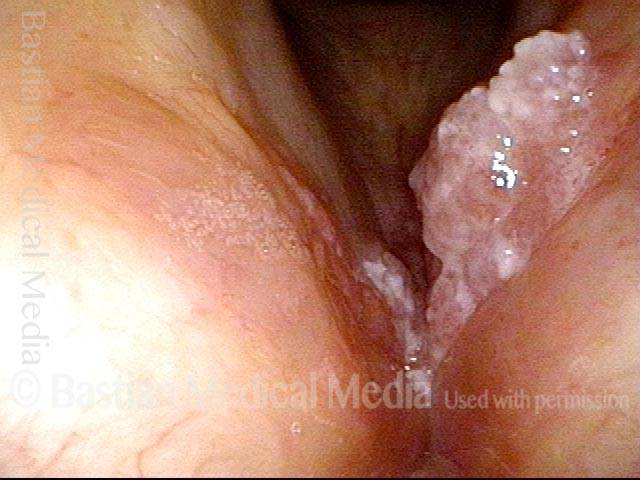
Glottic/vocal cord cancer (2 of 2)
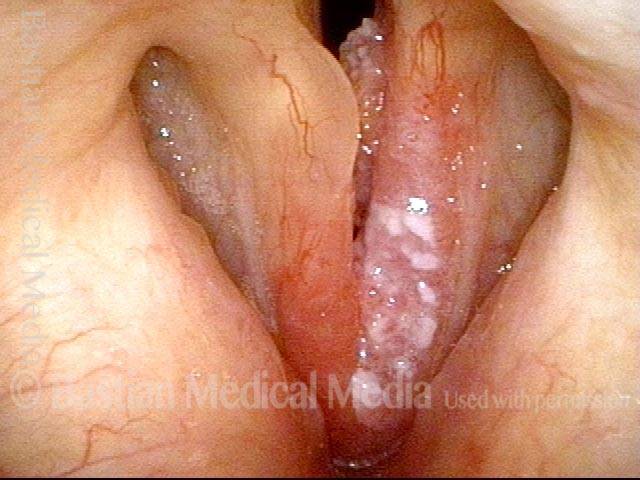
Supraglottic Cancer
Supraglottic cancer (1 of 4)
Supraglottic cancer (2 of 4)
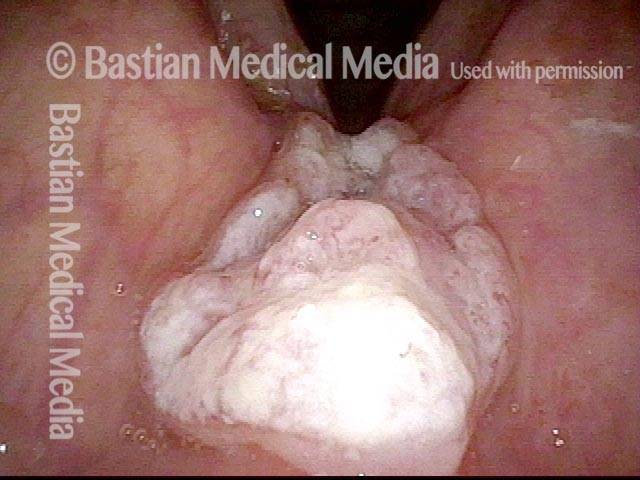
Supraglottic cancer (3 of 4)
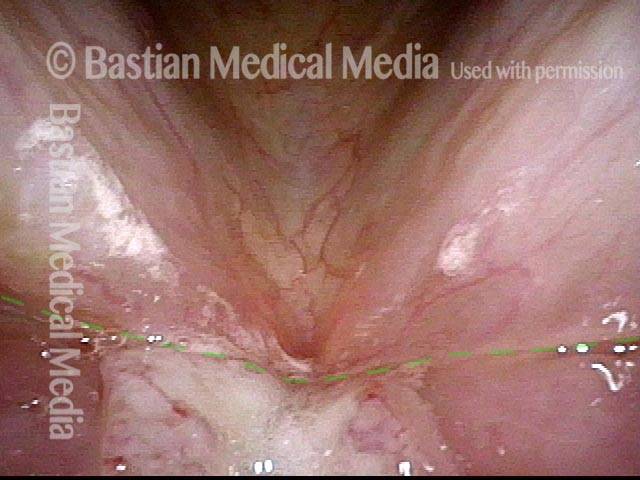
Supraglottic cancer (4 of 4)
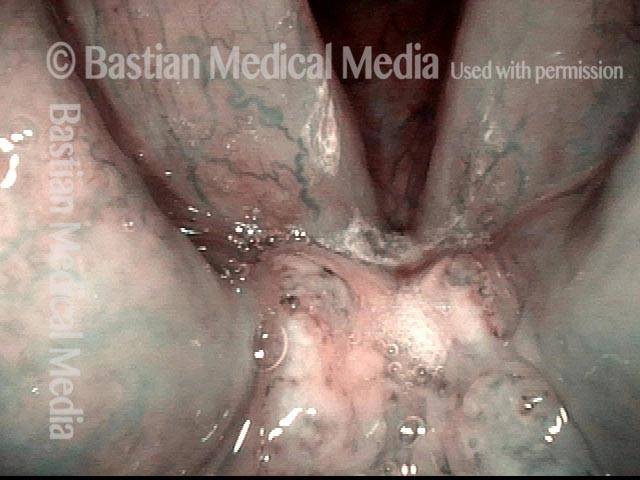
Hypopharyngeal Cancer, before and after Surgery
Hypopharyngeal cancer (1 of 10)
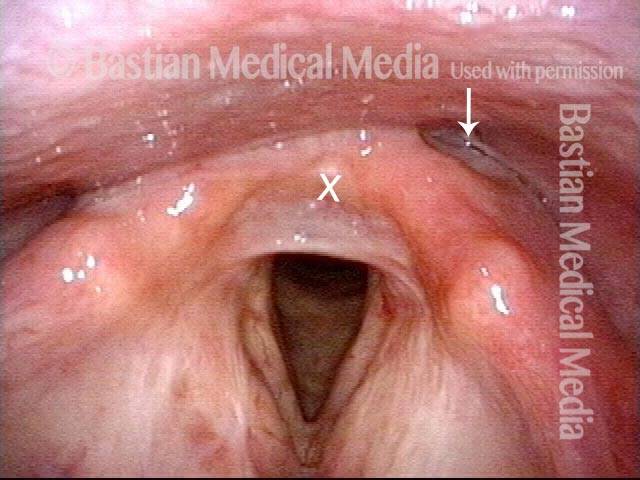
Hypopharyngeal cancer (2 of 10)
Hypopharyngeal cancer (3 of 10)
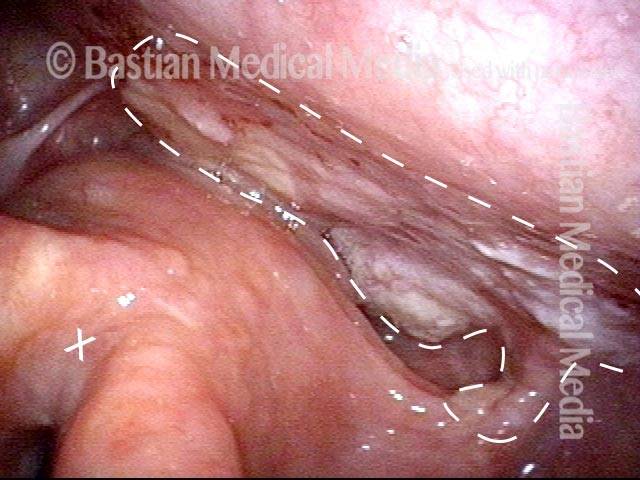
Hypopharyngeal cancer (4 of 10)
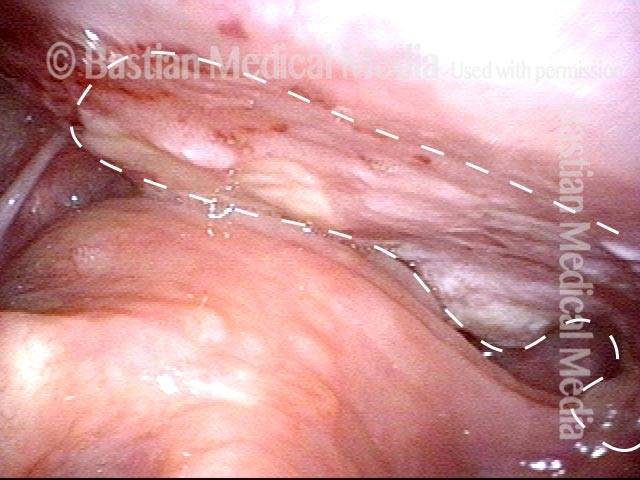
Hypopharyngeal cancer: 1 week after surgery (5 of 10)
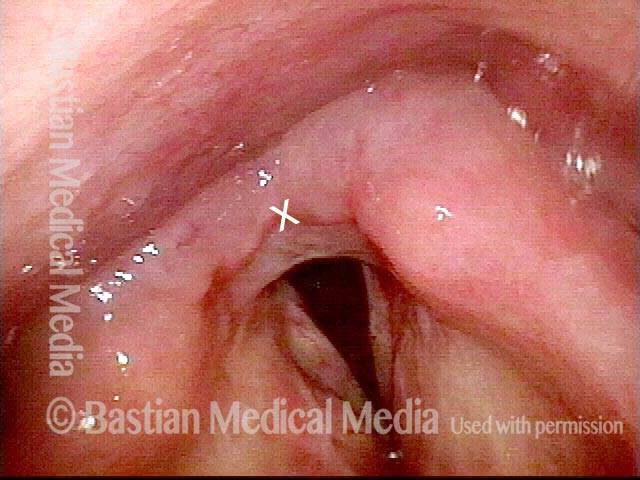
Hypopharyngeal cancer: 1 week after surgery (6 of 10)
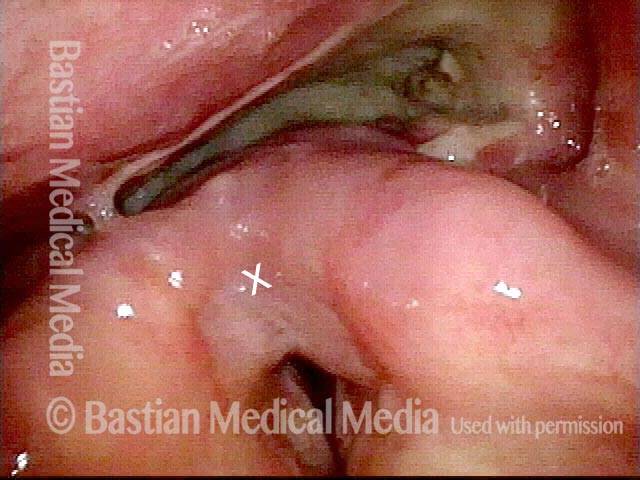
Hypopharyngeal cancer: 1 week after surgery (7 of 10)
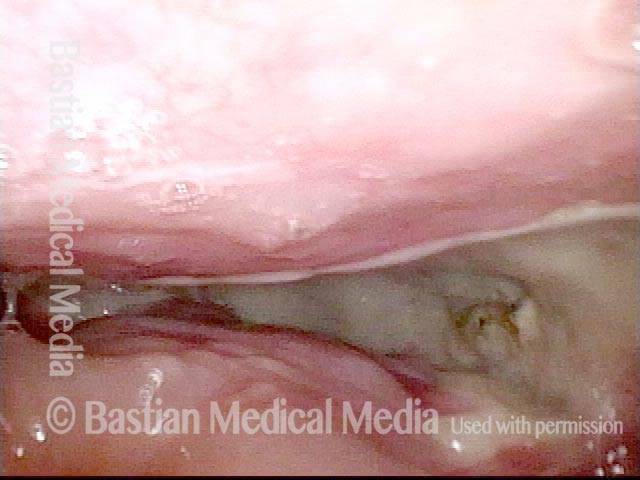
Hypopharyngeal cancer: 1 week after surgery (8 of 10)
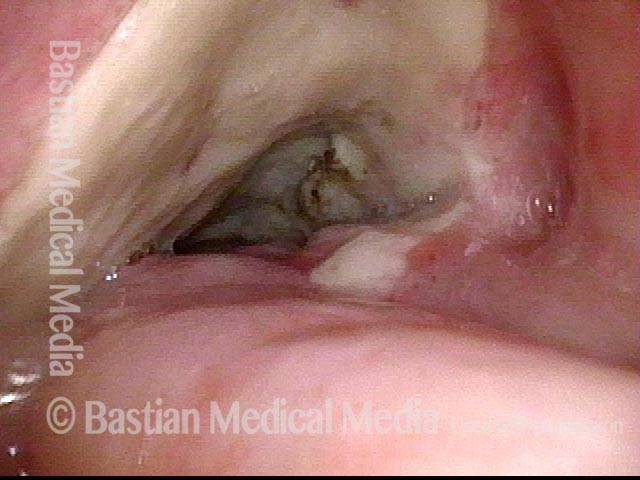
Hypopharyngeal cancer: several months after surgery (9 of 10)
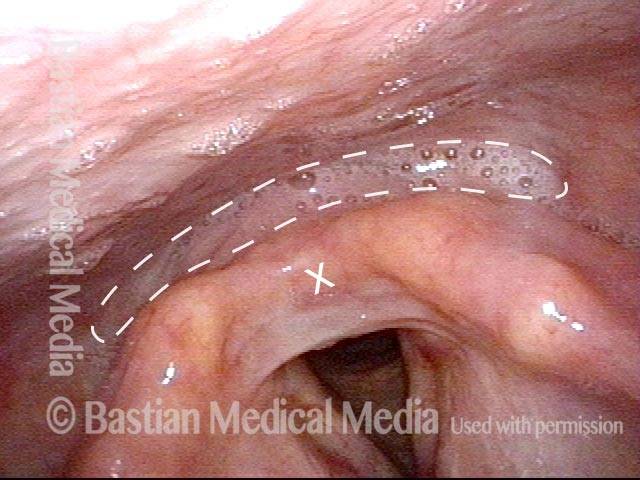
Hypopharyngeal cancer: several months after surgery (10 of 10)
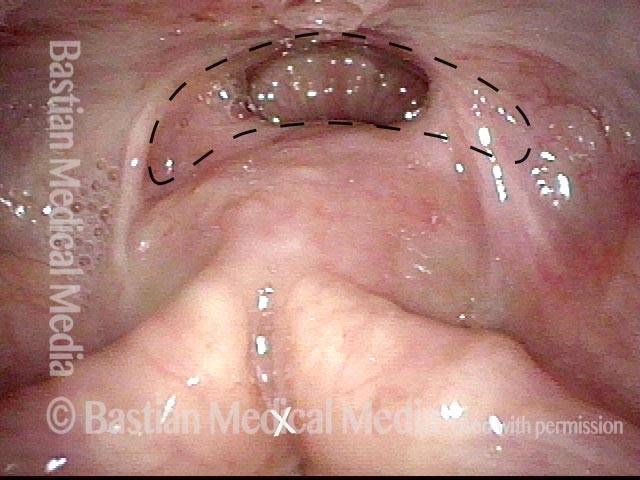
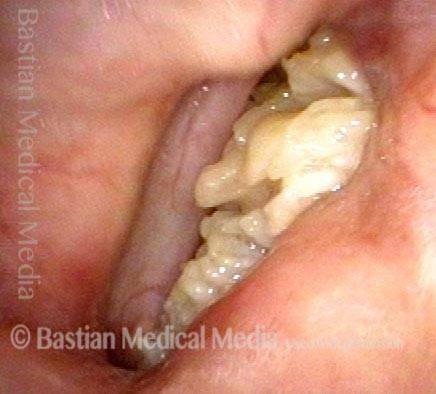
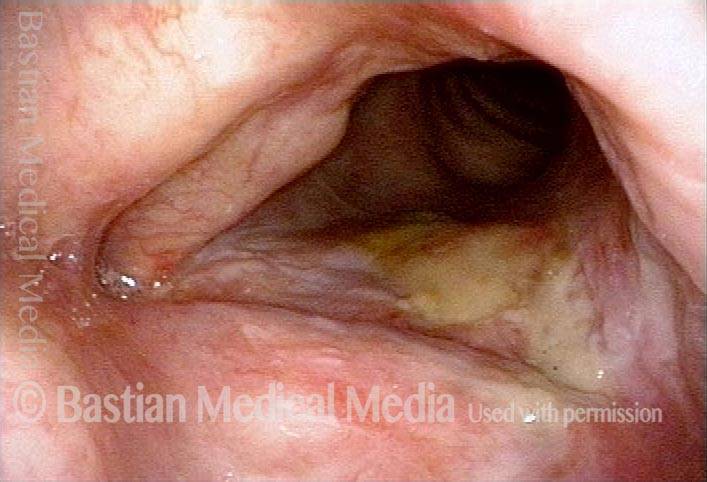
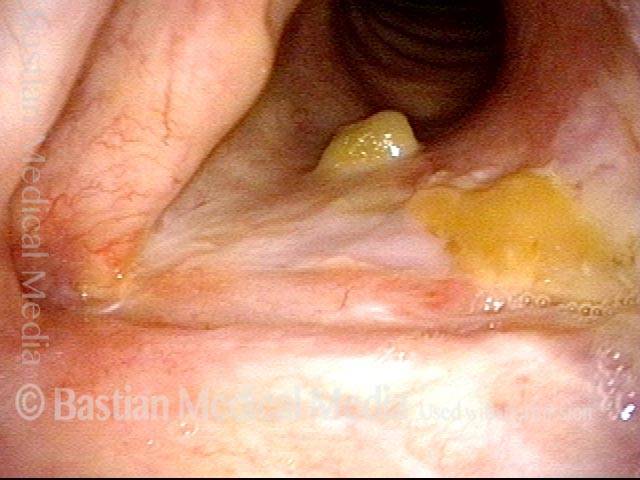
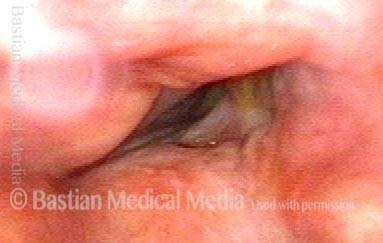
Verrucous Carcinoma, before and after Laser Treatment
Verrucous carcinoma (1 of 5)
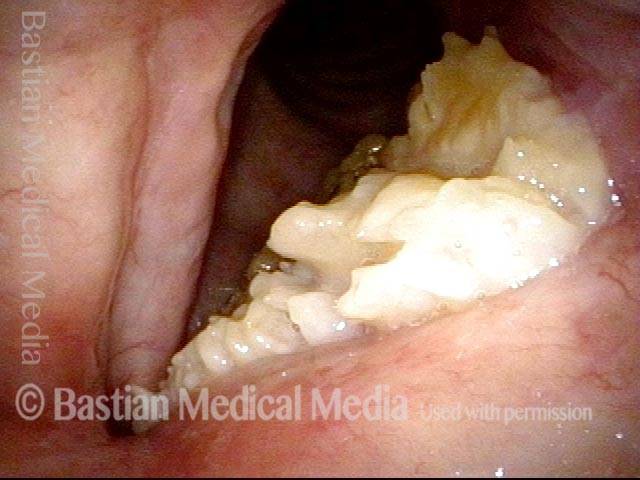
During voicing (2 of 5)
After laser treatment (3 of 5)
Mucus remains several weeks after laser treatment (4 of 5)
Much improvement several weeks after laser treatment (5 of 5)
Cancer, HPV Subtype 16, before and after Radiation
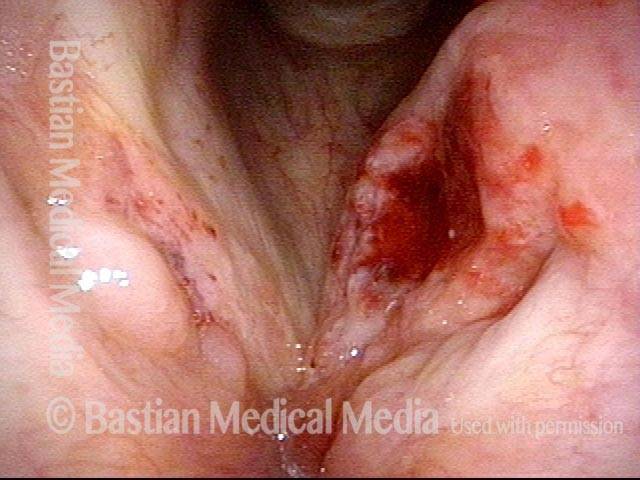
Cancer: HPV Subtype 16 (1 of 5)
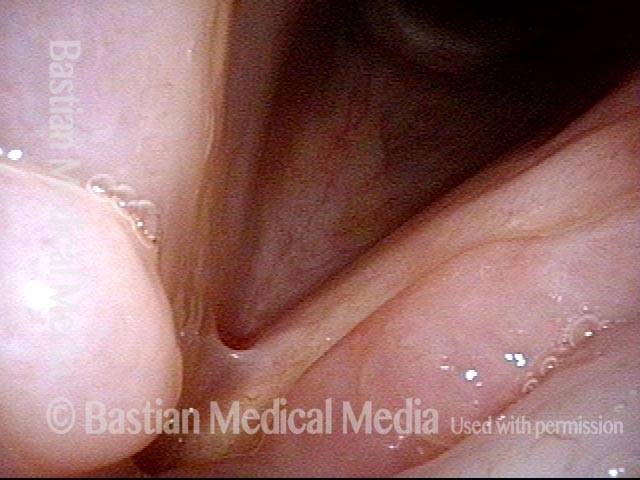
Cancer: HPV Subtype 16, after radiation therapy (3 of 5)
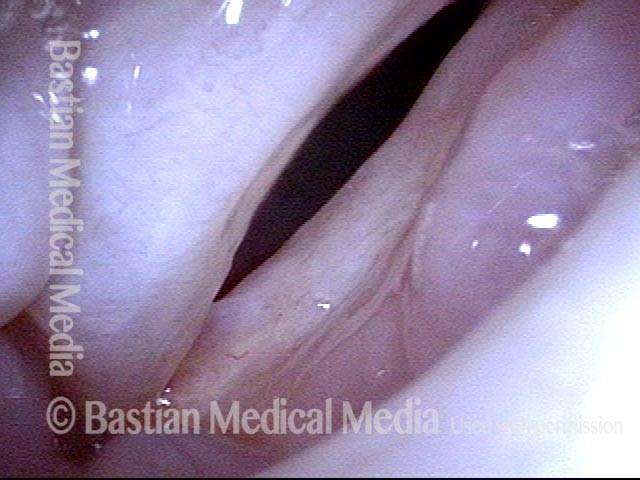
Cancer: HPV Subtype 16, after radiation therapy (4 of 5)
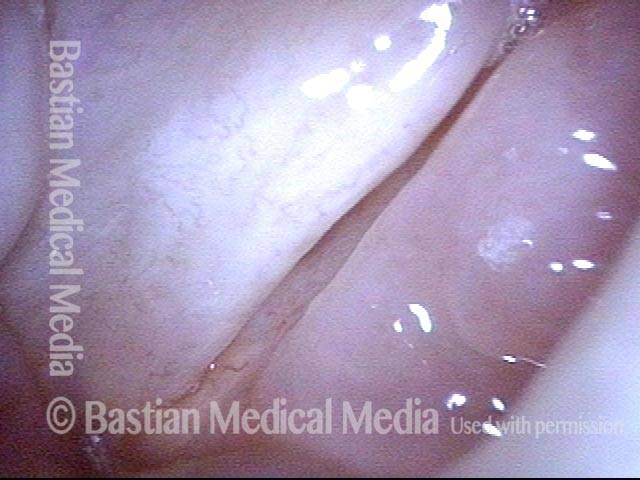
Cancer: HPV Subtype 16, after radiation therapy (5 of 5)
Vocal Cord Cancer, before, during, and after Radiation
Vocal cord cancer (1 of 12)
Vocal cord cancer (2 of 12)
Vocal cord cancer, 3 weeks after radiotherapy (4 of 12)
Vocal cord cancer, 3 weeks after radiotherapy (5 of 12)
Vocal cord cancer, 2 months after radiotherapy (6 of 12)
Vocal cord cancer, 2 months after radiotherapy (7 of 12)
4 Years after radiation therapy (8 of 12)
Telangiectasia (9 of 12)
Closer look (10 of 12)
Anterior Web and Telangiectasia (11 of 12)
Narrow band lighting (12 of 12)
Example 2
Vocal cord cancer (1 of 8)
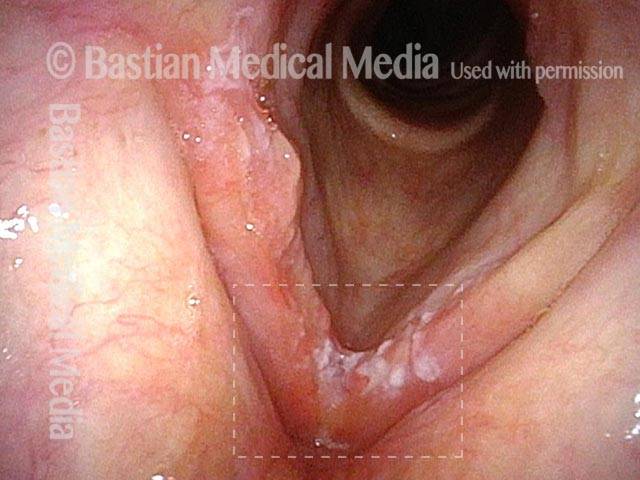
Vocal cord cancer (2 of 8)
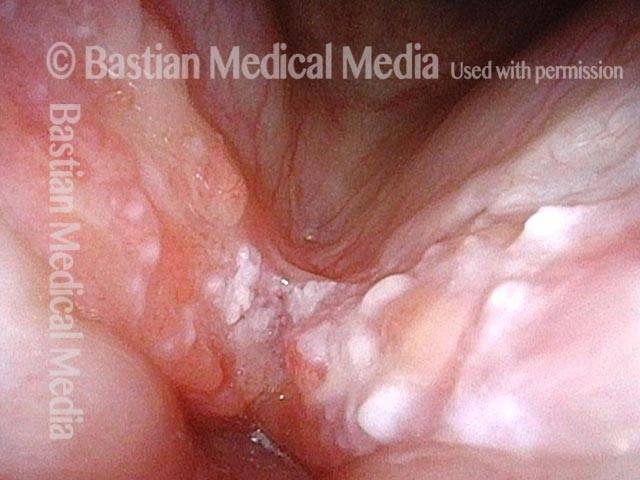
Vocal cord cancer, during radiation (3 of 8)
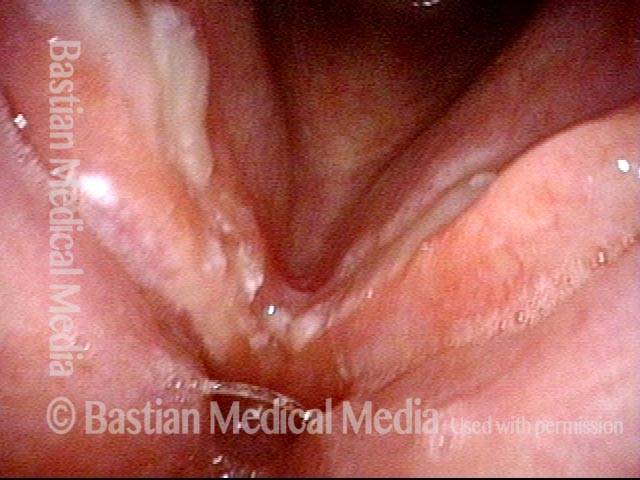
Vocal cord cancer, during radiation (4 of 8)
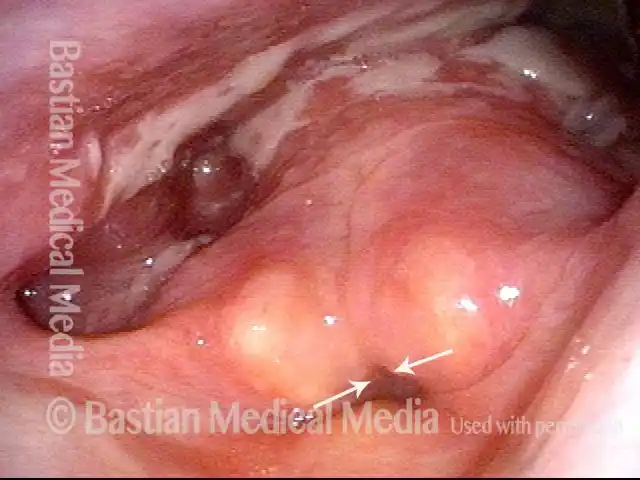
Vocal cord cancer, 2 months after radiation (5 of 8)
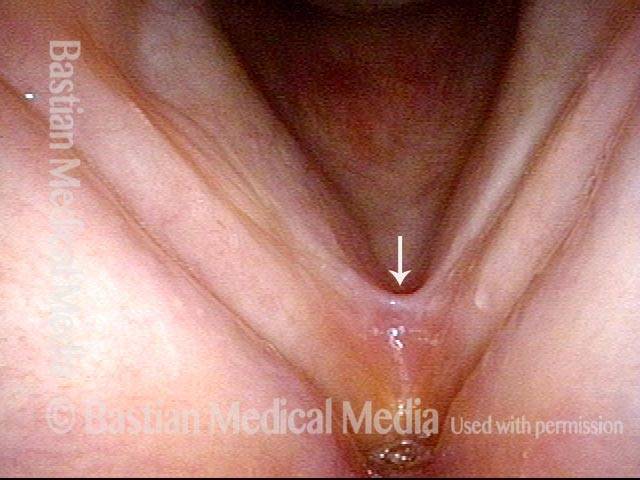
Vocal cord cancer, 4 months after radiation (6 of 8)
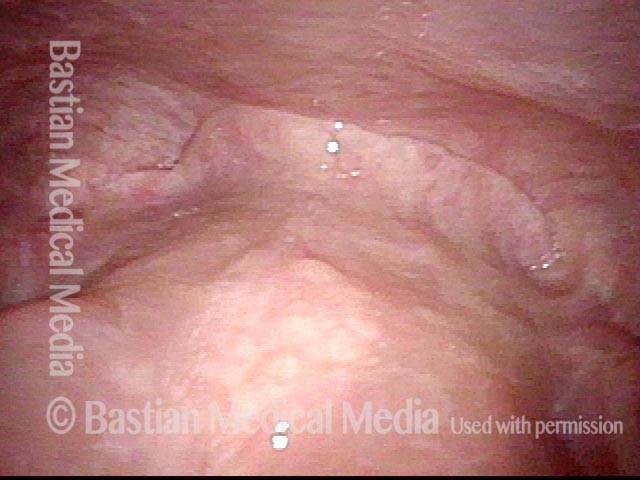
Vocal cord cancer, 6 months after radiation (7 of 8)
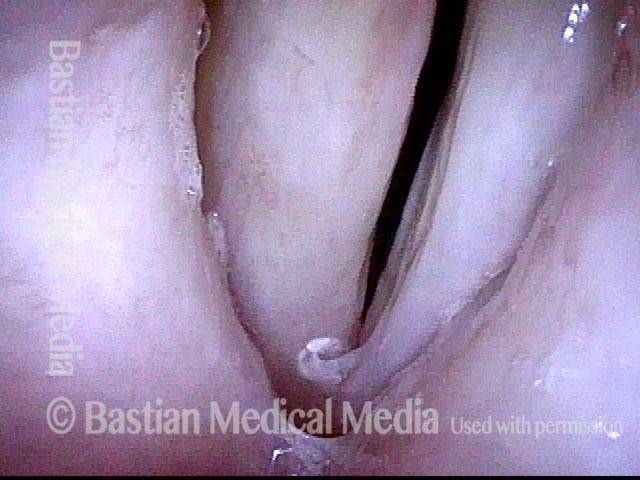
Vocal cord cancer, 6 months after radiation (8 of 8)
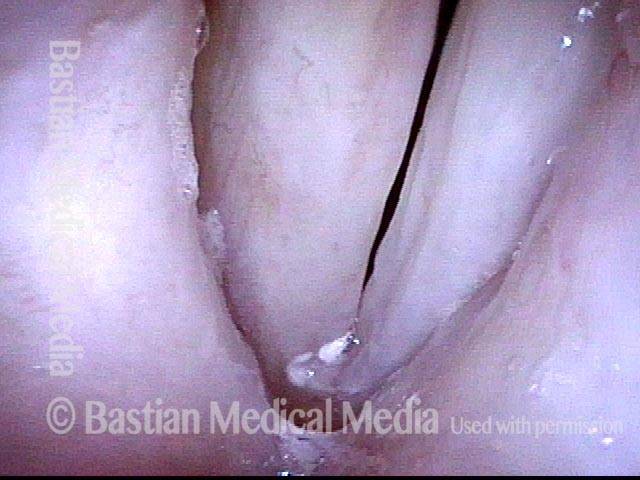
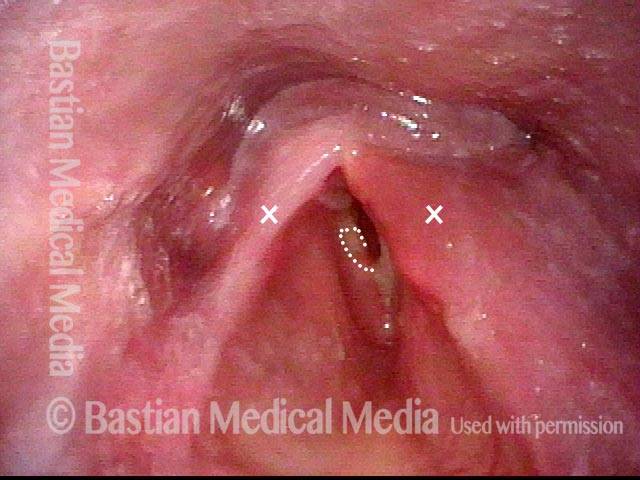
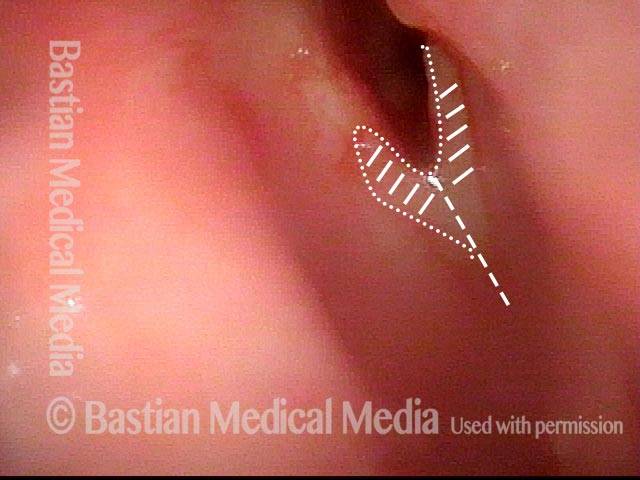
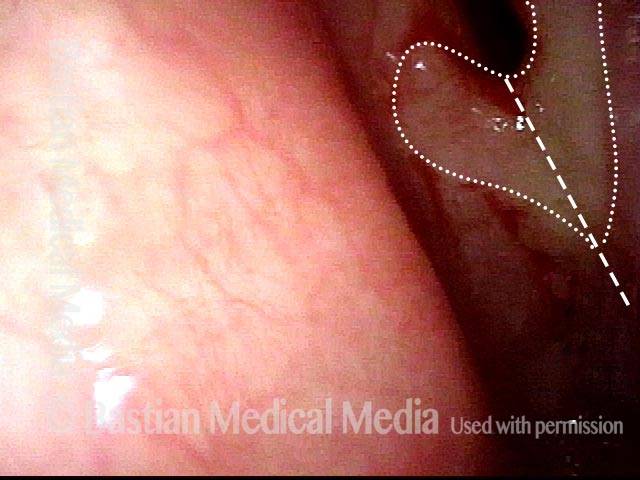
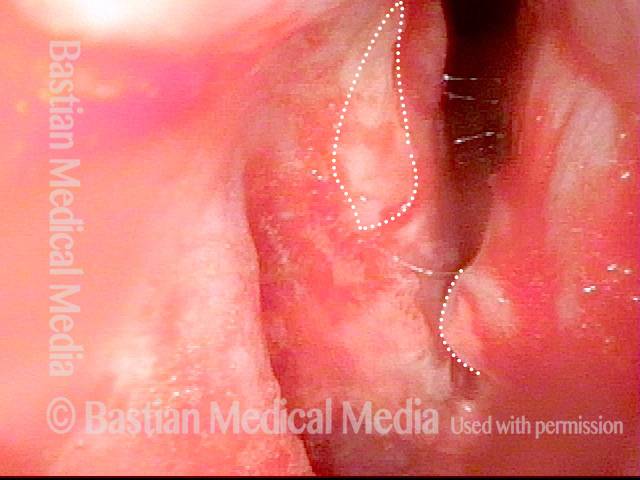
Radiation Induced Web
Post radiation therapy (1 of 4)
Web formation (2 of 4)
Closer view of ulceration and web (3 of 4)
Flexible scope used to separate vocal cords (4 of 4)
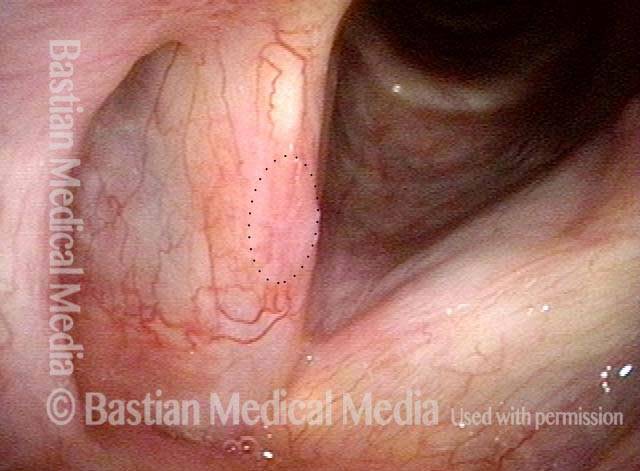
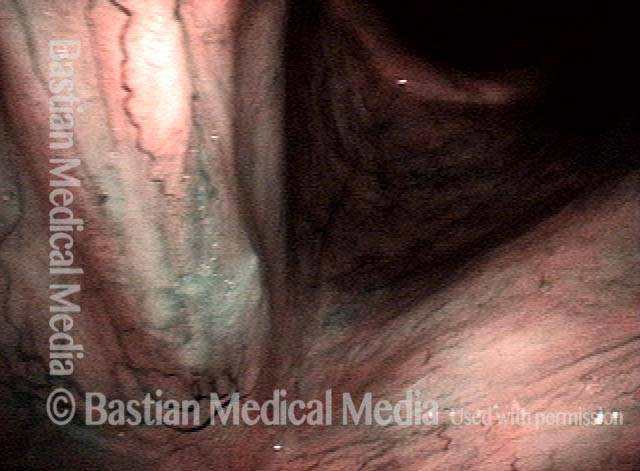
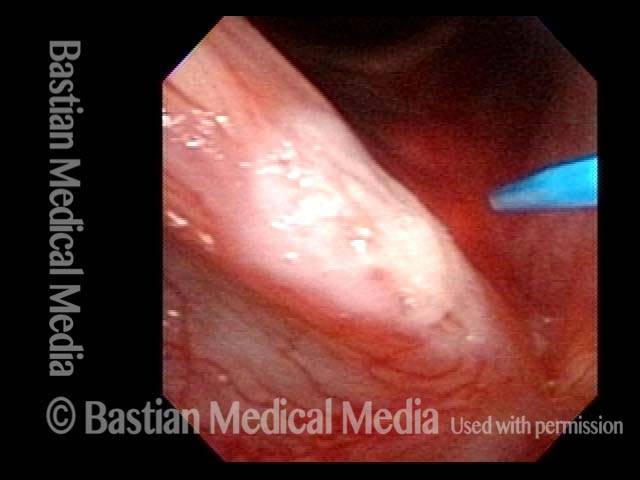
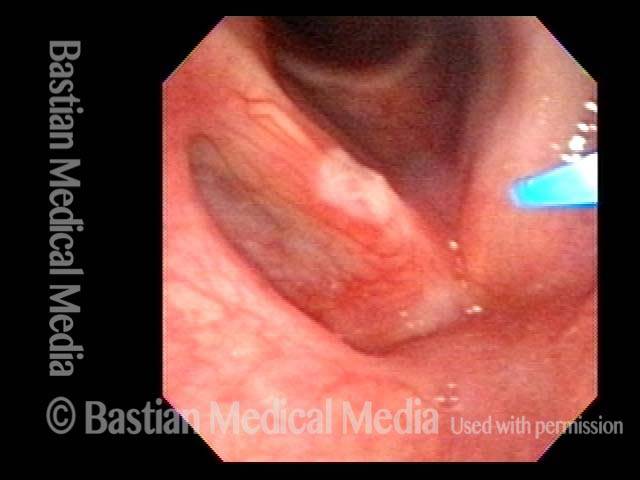
Larynx Cancer Managed like “skin cancer”
Two years after excision (1 of 4)
Narrow-band lighting (2 of 4)
During thulium laser coagulation (3 of 4)
After thulium laser coagulation (4 of 4)
A Case for Radiation Instead of Laser Resection
Long term smoker (1 of 4)
Tumor (2 of 4)
Tumor (2 of 4)
Radiation therapy suggested (3 of 4)
Two months later (4 of 4)
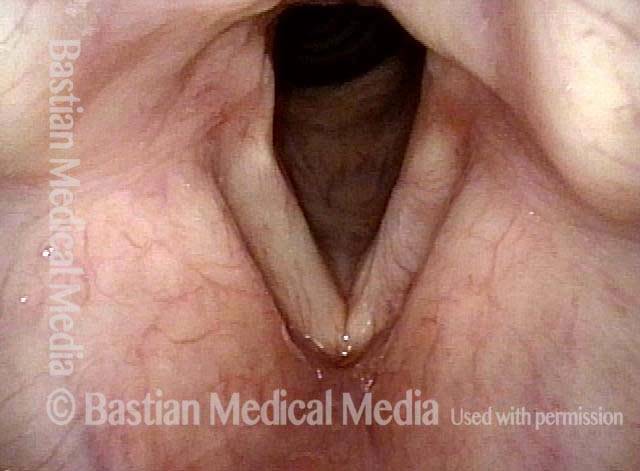
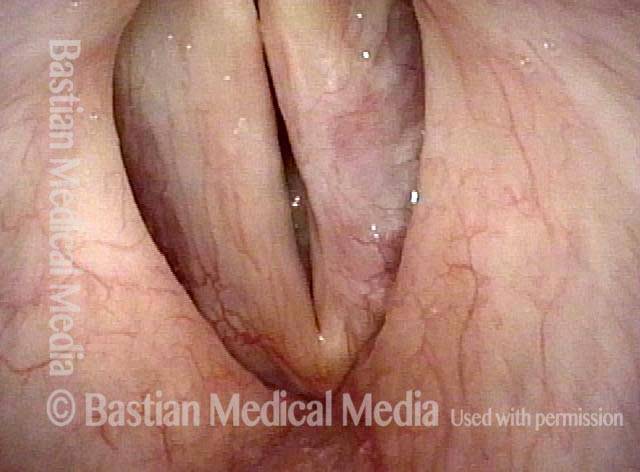
Scarring after Cancer Treatment but with Very Good Voice
Post laser excision (1 of 4)
Prephonatory instant (2 of 4)
Phonation (3 of 4)
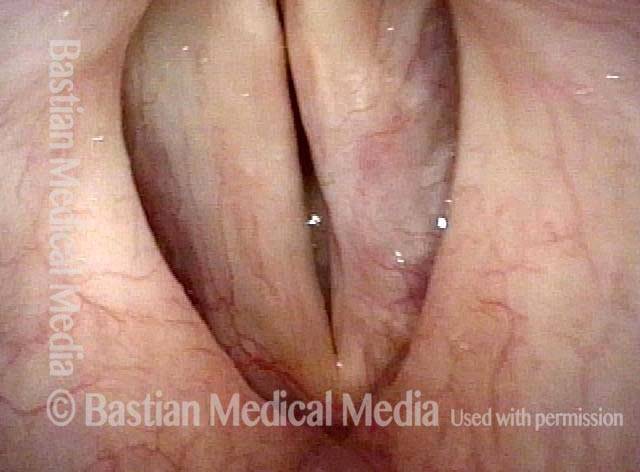
Phonation (3 of 4)
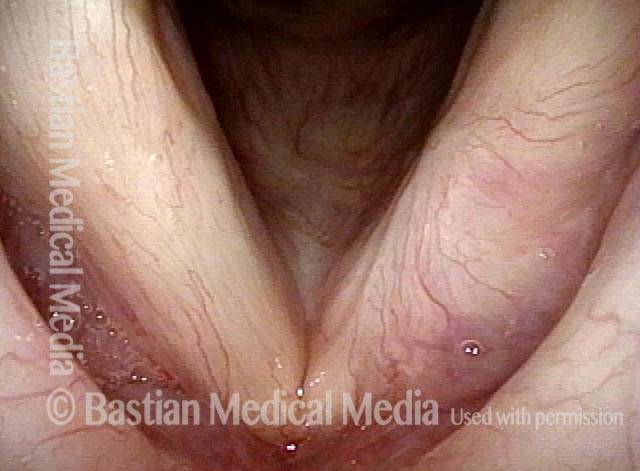
Close-up view (4 of 4)
Cancer Beginning to Block Airway
Formerly heavy smoker (1 of 2)
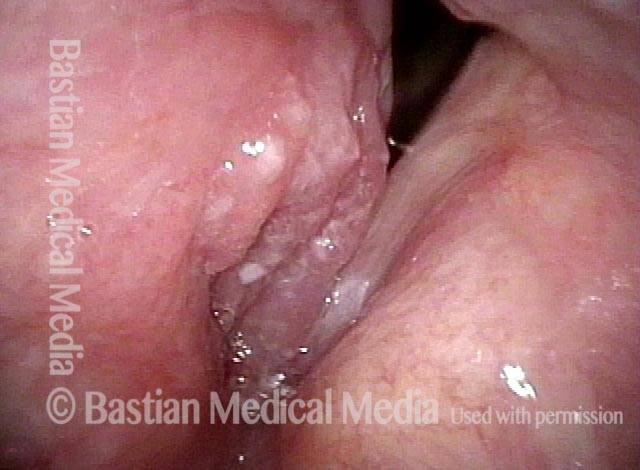
Breaking the Rules in Larynx Cancer
Recurrent cancer (1 of 8)
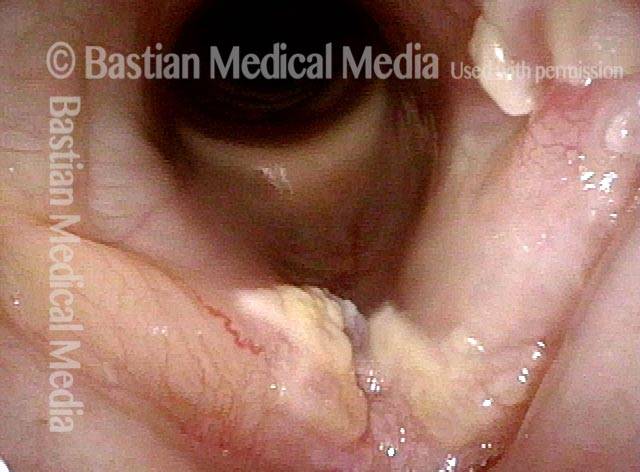
Closer view (2 of 8)
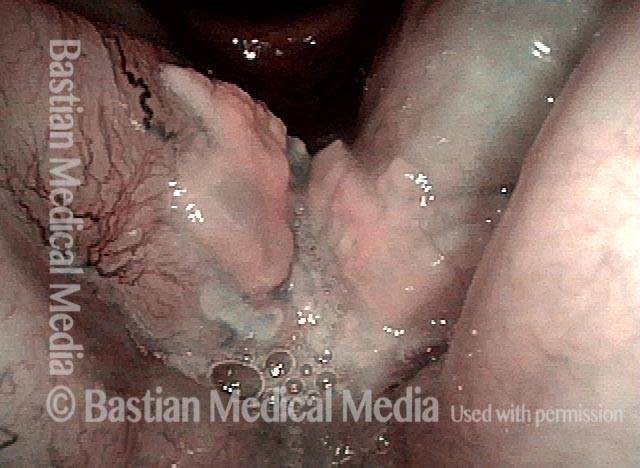
One week post laser resection (3 of 8)
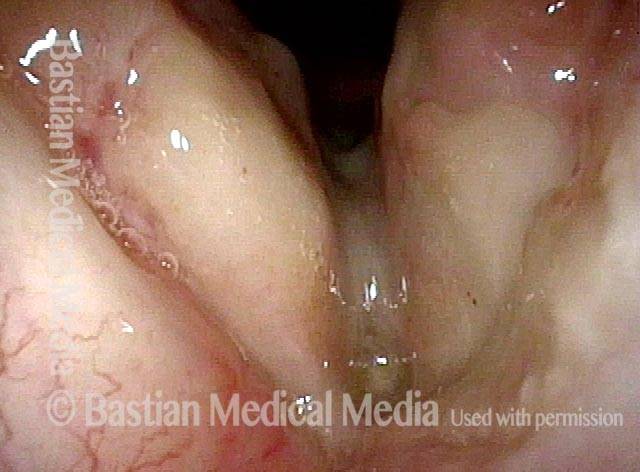
One year postop (4 of 8)
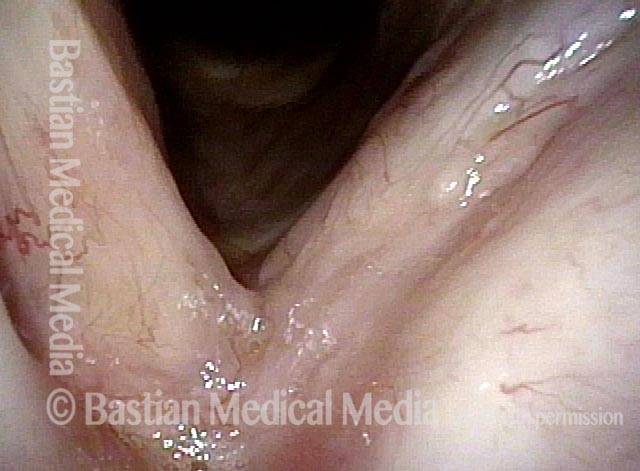
True cord phonation (5 of 8)
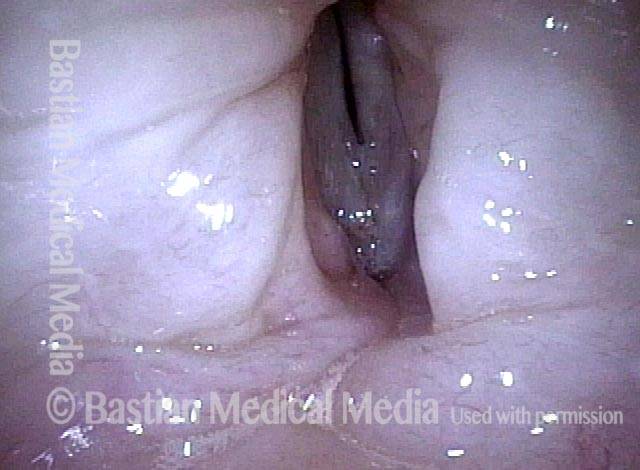
False vocal cords (6 of 8)
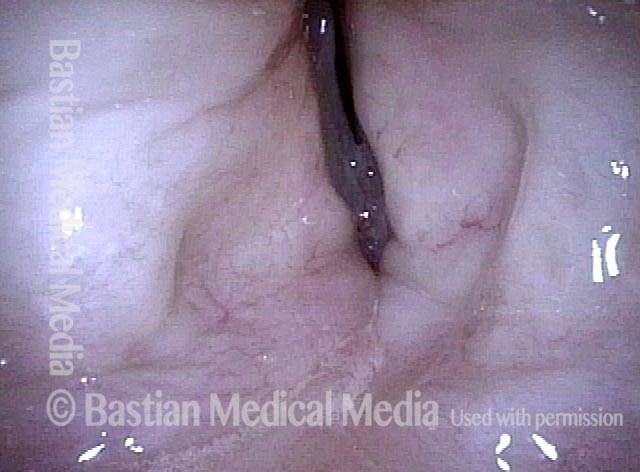
False vocal cord closure (7 of 8)
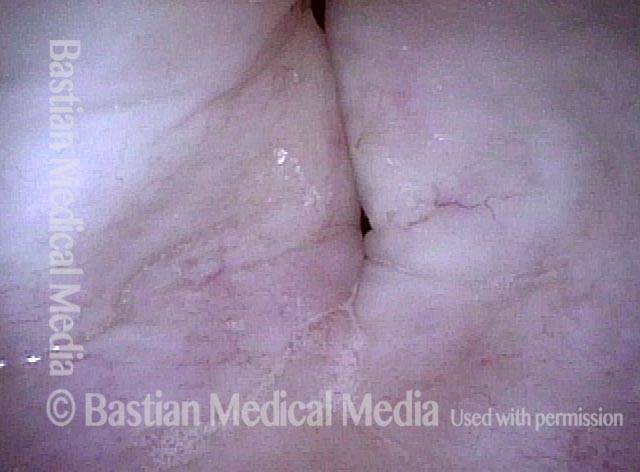
True cords (8 of 8)
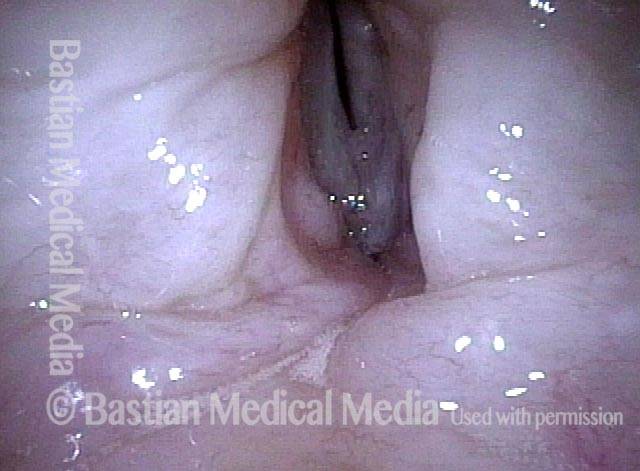
True cords (8 of 8)
Biopsy of Early Vocal Cord Cancer
Chronic hoarseness (1 of 3)
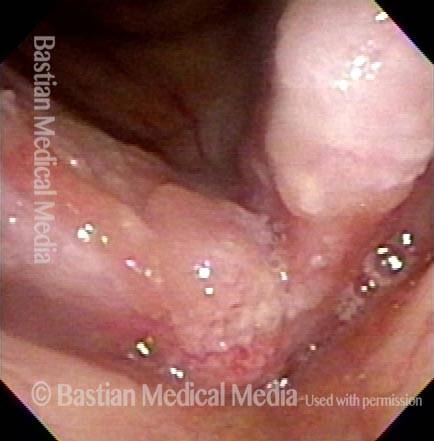
Just before biopsy (2 of 3)
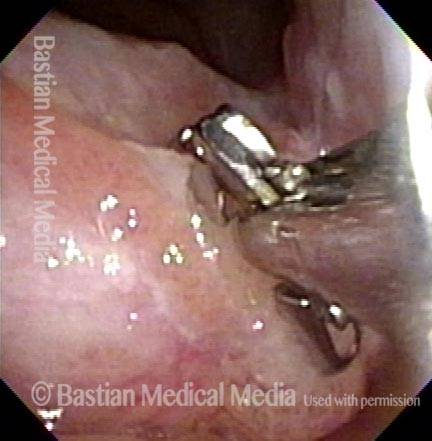
Cancer finding (3 of 3)
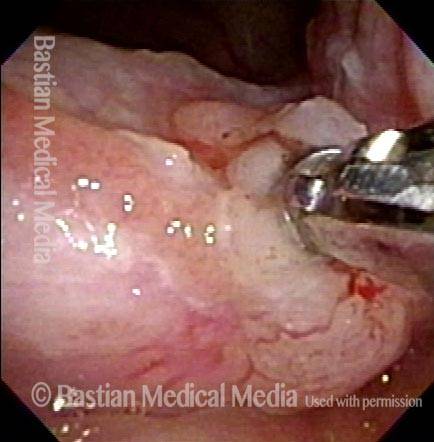
Tumor in Trachea
Biopsy (1 of 4)
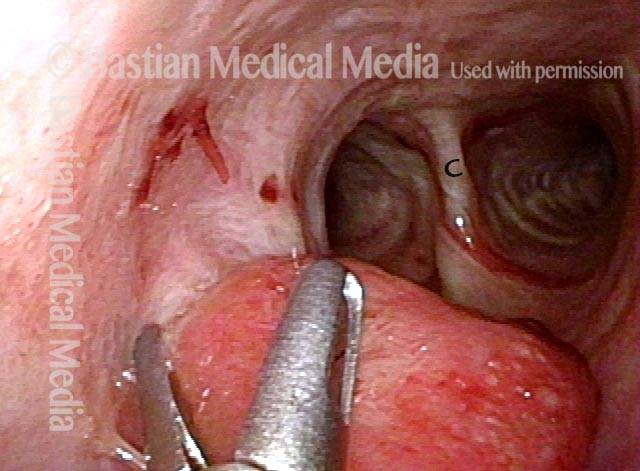
Biopsy (1 of 4)
After biopsy (2 of 4)
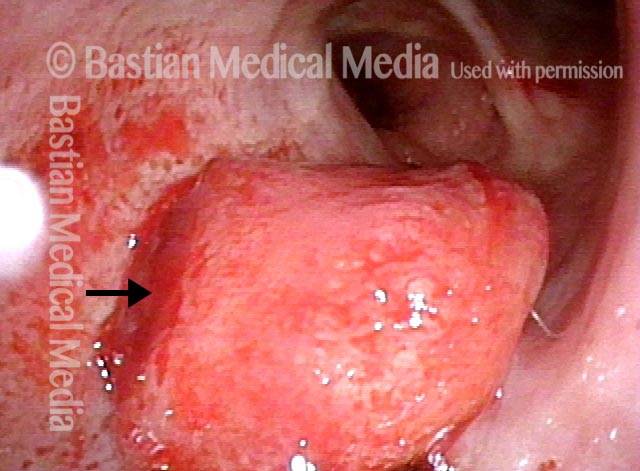
Tumor gone (3 of 4)
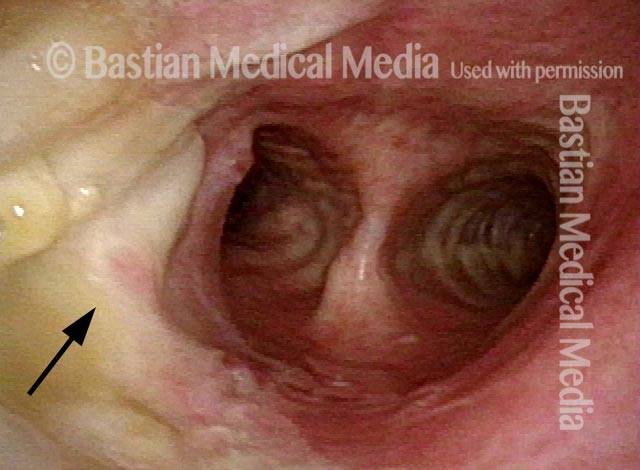
Tumor gone (3 of 4)
Slow return (4 of 4)
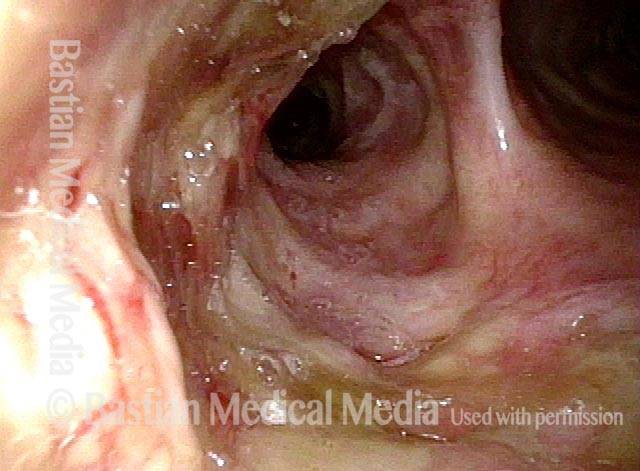
HPV 31 Cancer Cure
Carcinoma in situ (1 of 4)
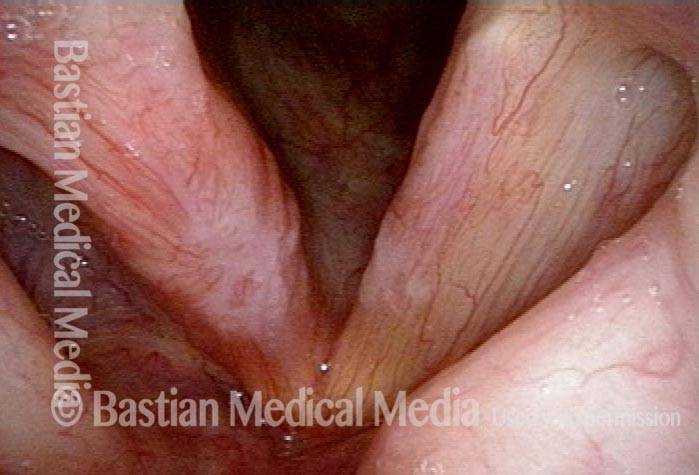
HPV subtype 31 (2 of 4)
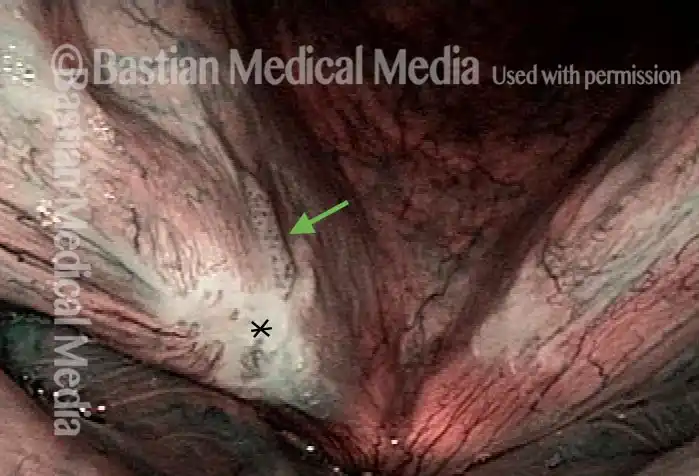
Excisions (3 of 4)
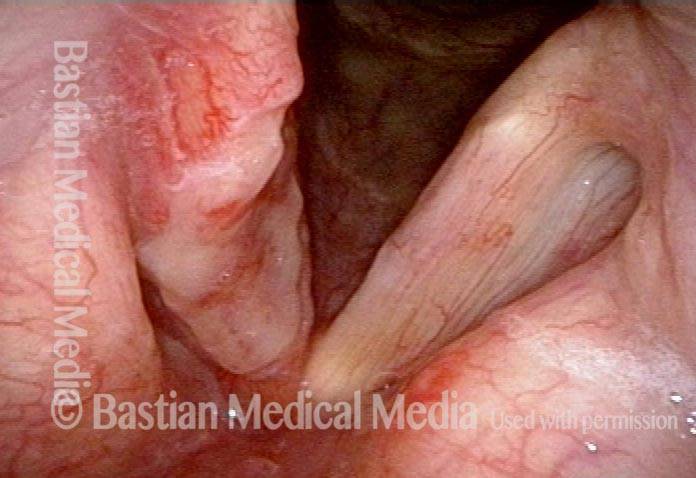
Excisions (3 of 4)
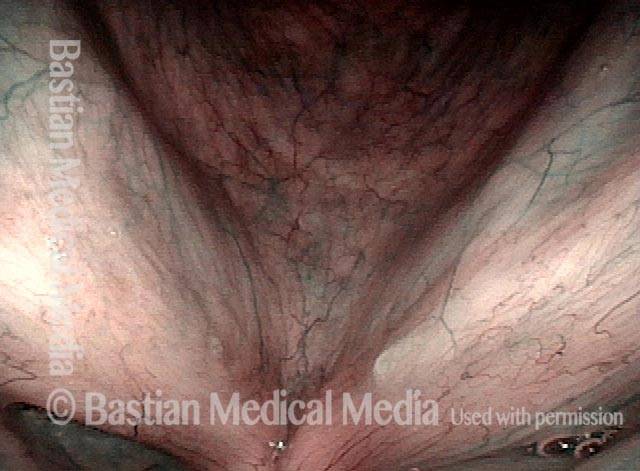
Seven years later (4 of 4)
Before and after Radiation for Vocal Cord Cancer
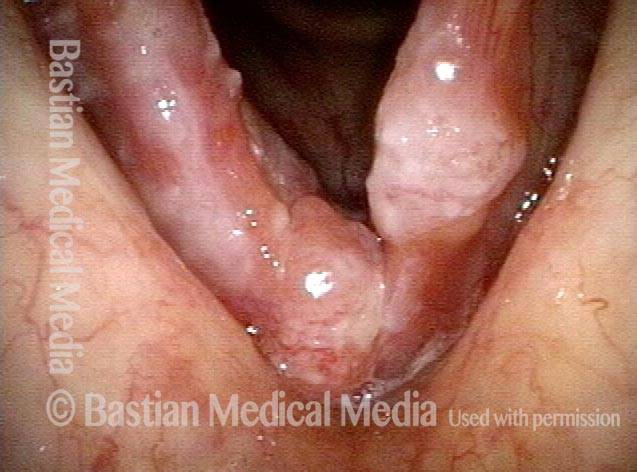
Bilateral vocal cord cancer (1 of 4)
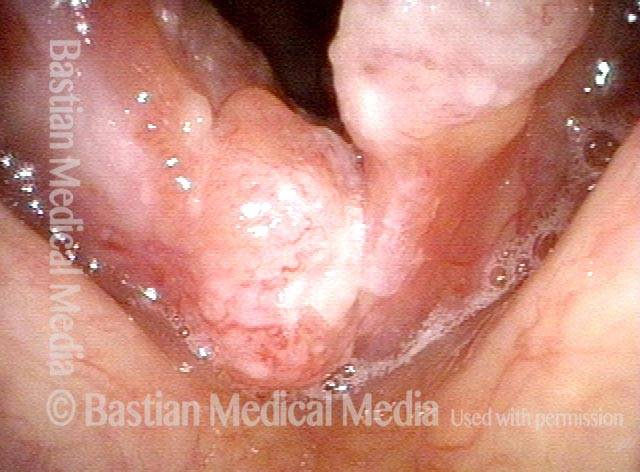
“Tumor vessels” (2 of 4)
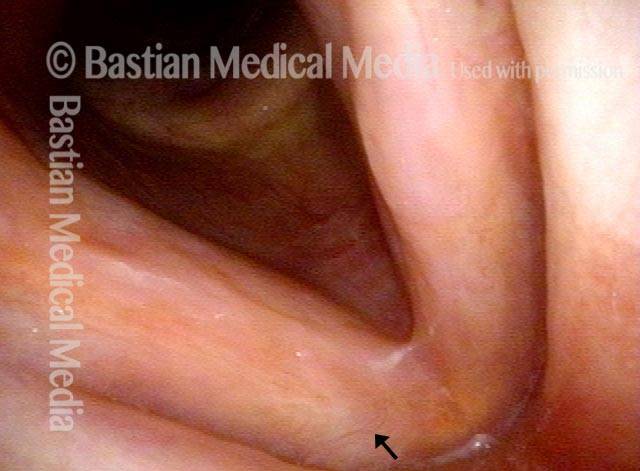
After radiotherapy (3 of 4)
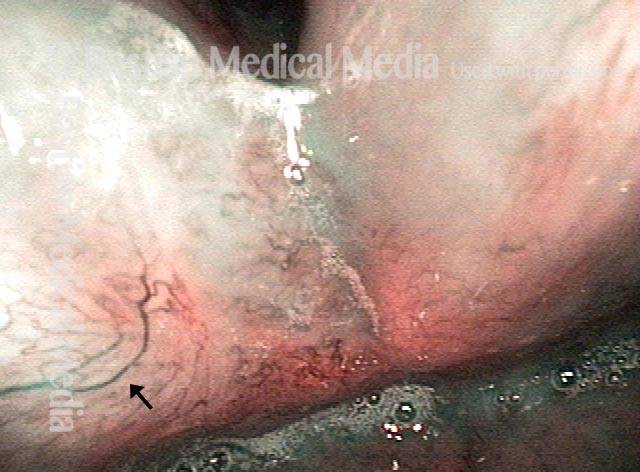
Vascular pattern (4 of 4)
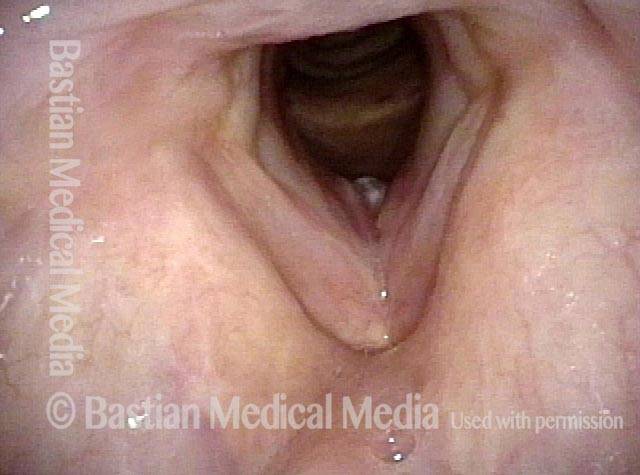
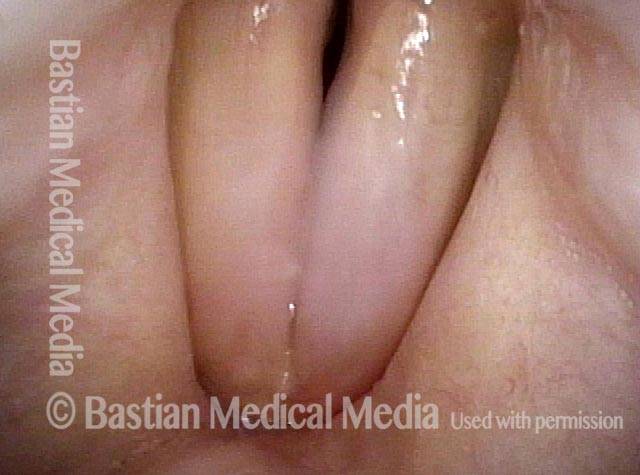
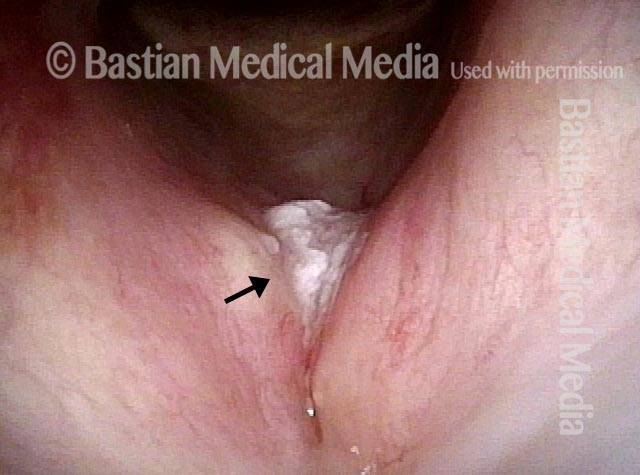
Small, but Dangerous!
Post radiotherapy (1 of 4)
Normal voice (2 of 4)
Persistent cancer (3 of 4)
T4 tumor (4 of 4)
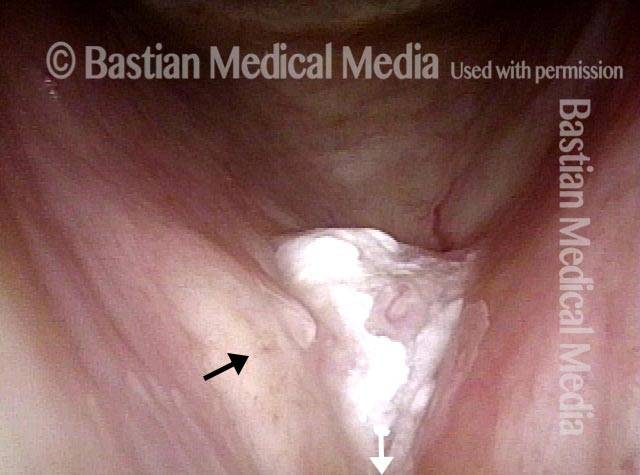
T4 tumor (4 of 4)
Unusual Posterior & Transglottic Epicenter for Larynx Cancer
Tumor (1 of 4)
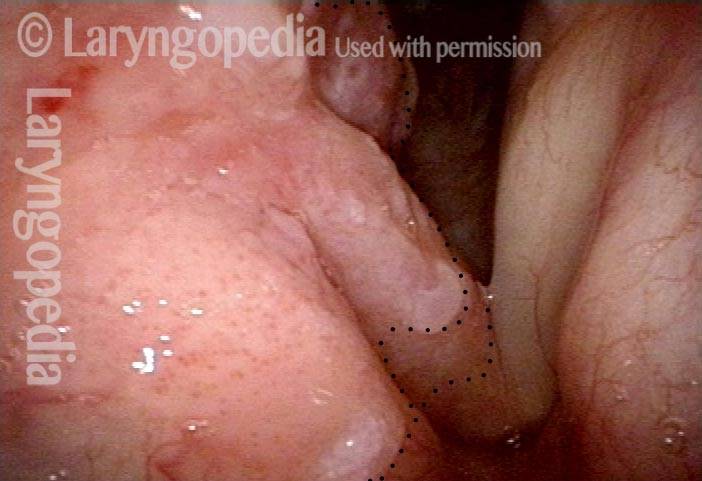
Tumor (1 of 4)
Accentuation of the vascularity (2 of 4)
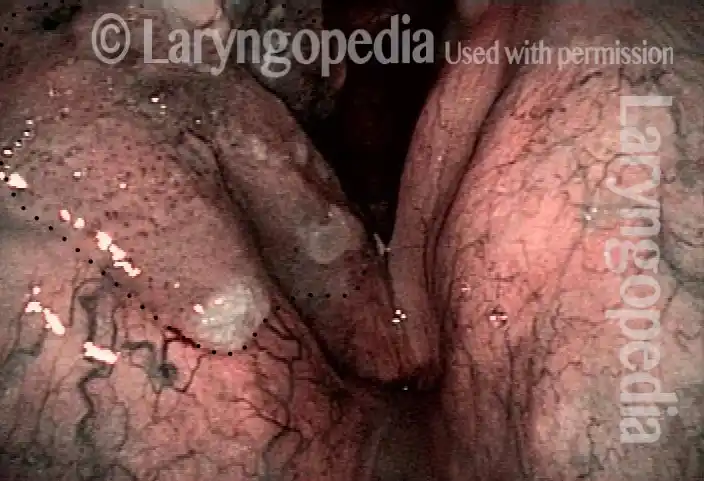
Posterior commissure (3 of 4)
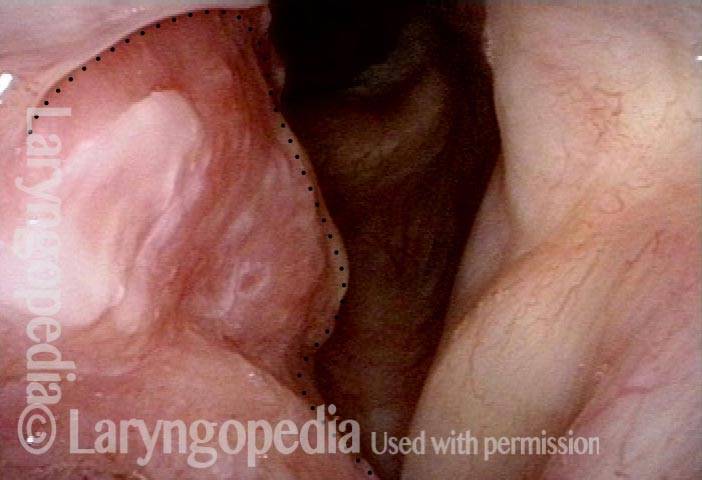
A year later (4 of 4)
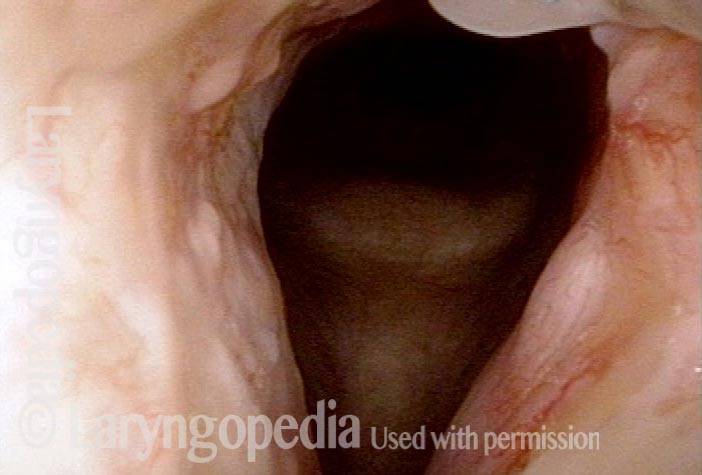
Nice try, but on to Radiation
Vocal cord lesion (1 of 4)
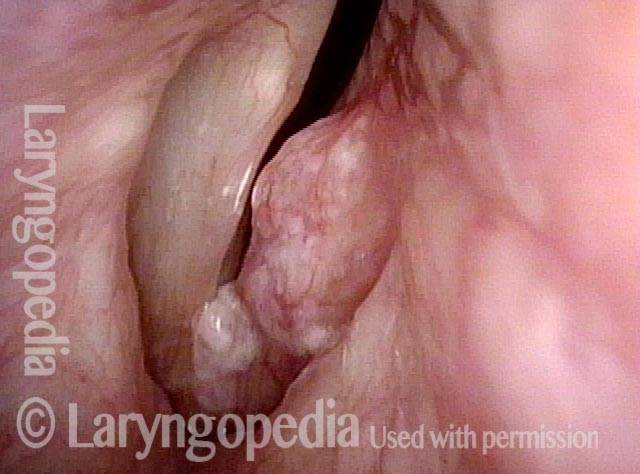
Closer view (2 of 4)
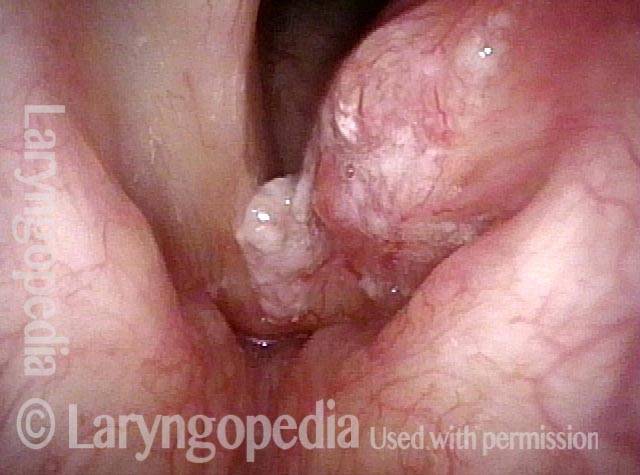
Removal of tumor (3 of 4)
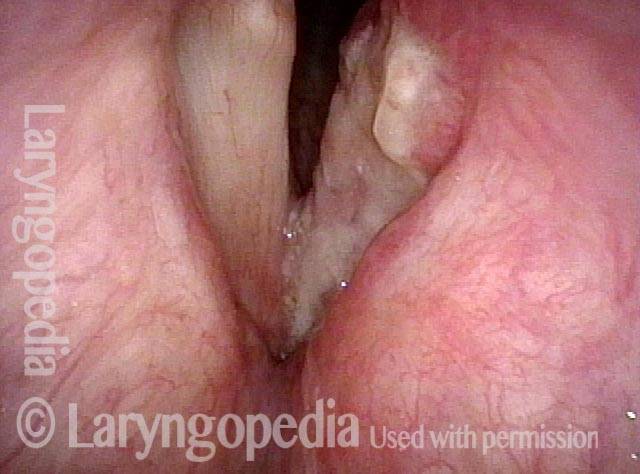
Nice try, but on to radiation (4 of 4)
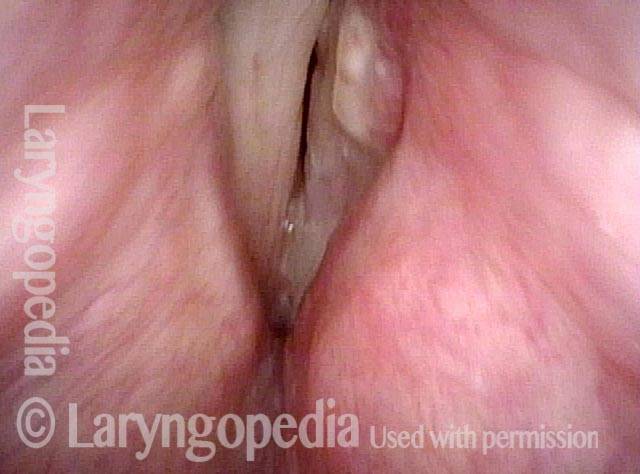
Progressive Cricoarytenoid Joint Fibrosis / Fixation as a Late Complication of Radiation
25 years post radiotherapy (1 of 4)
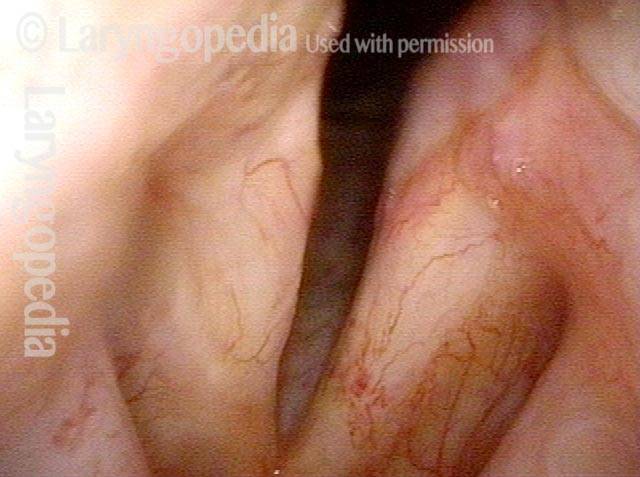
Fibrosis (2 of 4)
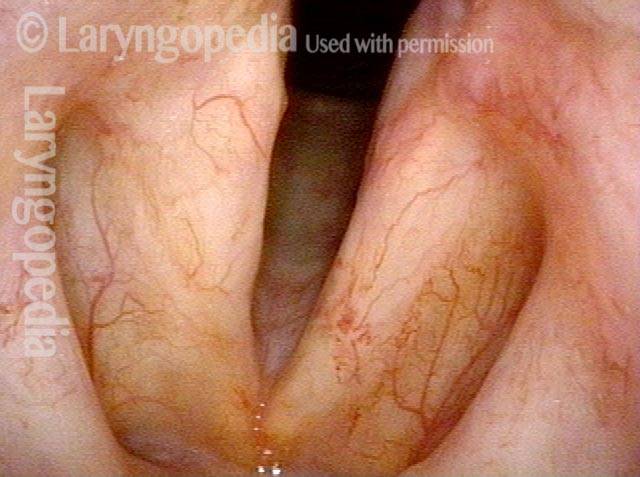
Fibrosis (2 of 4)
Closed phase (3 of 4)
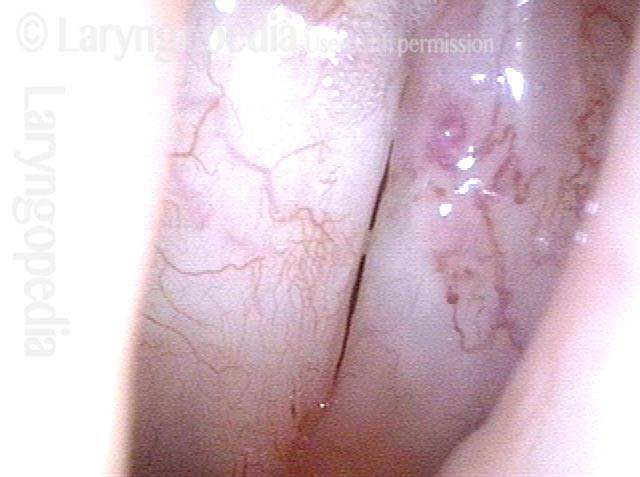
Open phase (4 of 4)
Open phase (4 of 4)
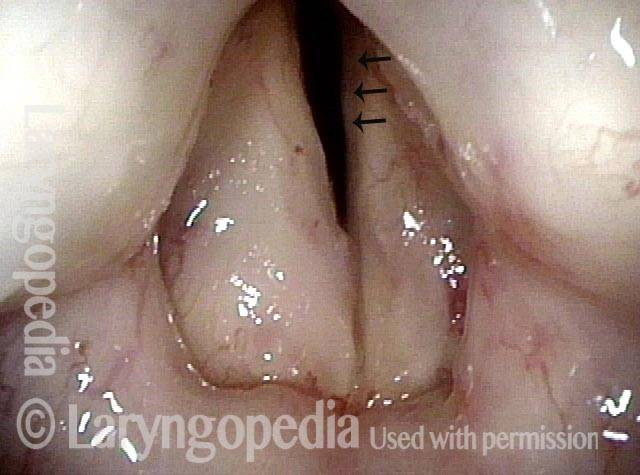
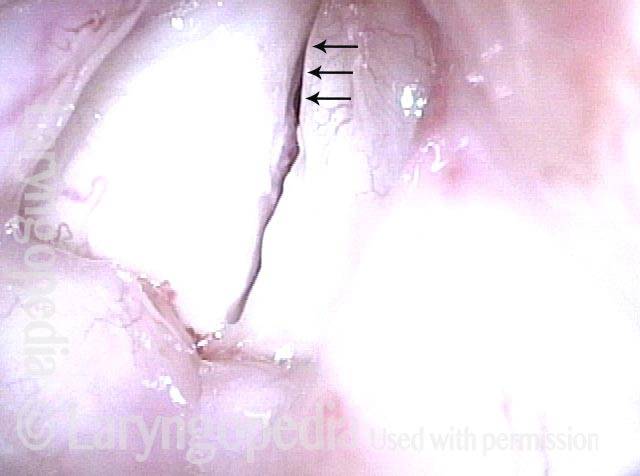
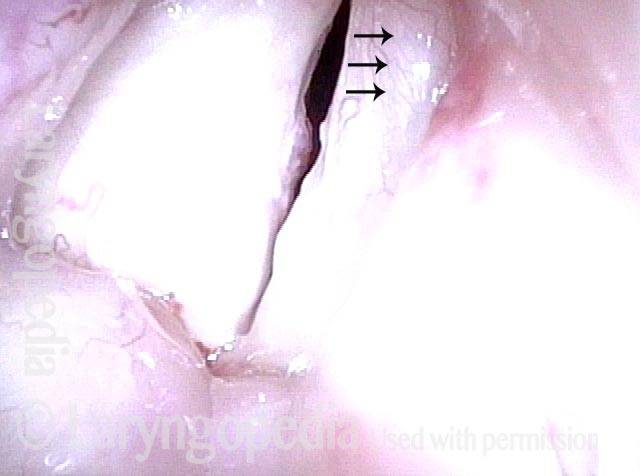
Progressive Radiation Fibrosis Effects on the Larynx and a Solution to some of it
Forty years post-radiation (1 of 8)
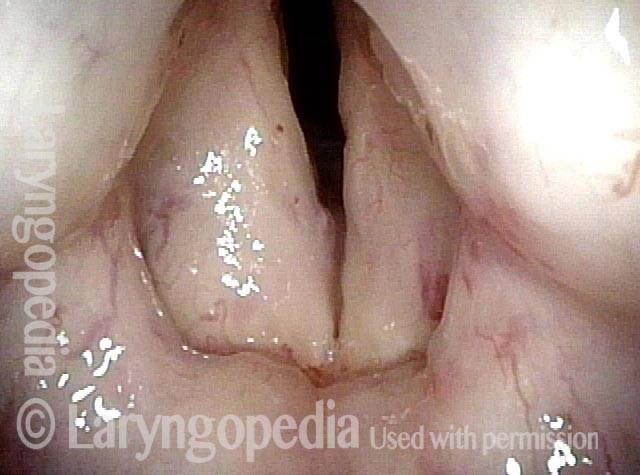
Involuntary inspiratory voice (2 of 8)
Only capable of high pitch (3 of 8)
Open phase vibration (4 of 8)
One week post-commissuroplasty (5 of 8)
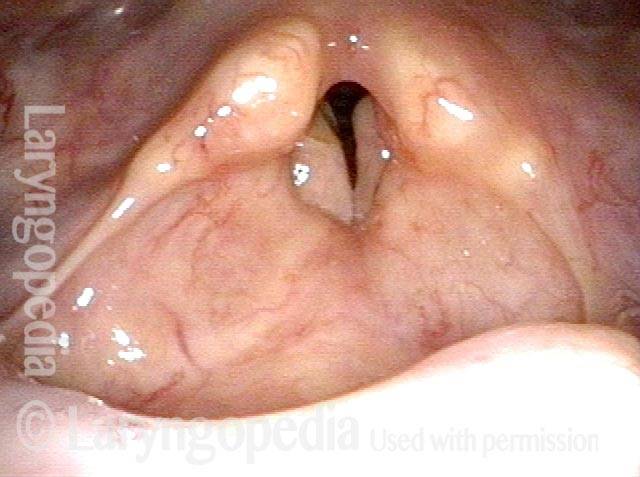
Rapid inhalation, closer view (6 of 8)
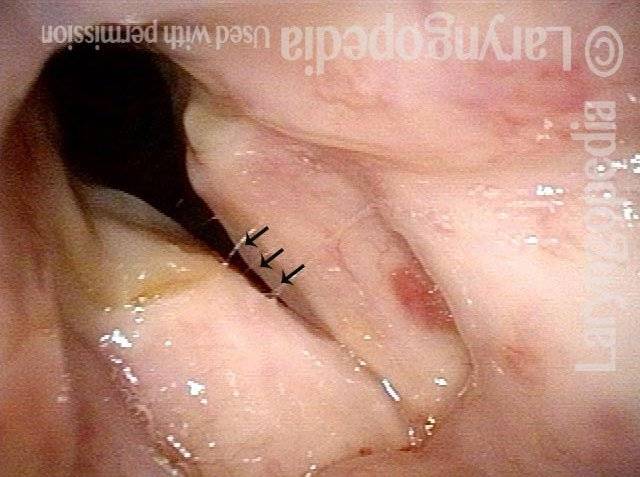
Three months post-surgery (7 of 8)
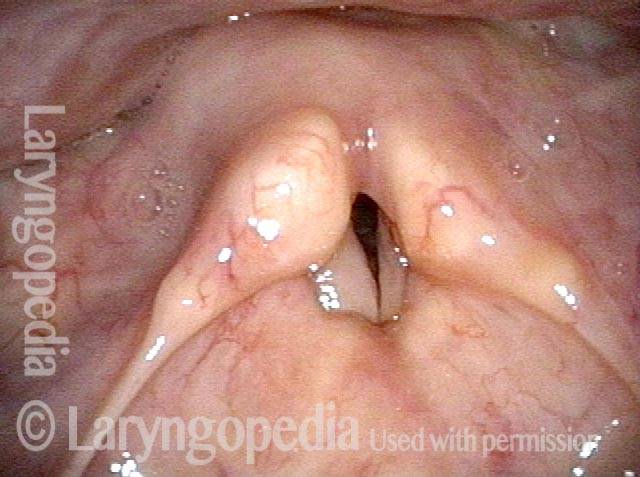
Closer view, post-surgery (8 of 8)
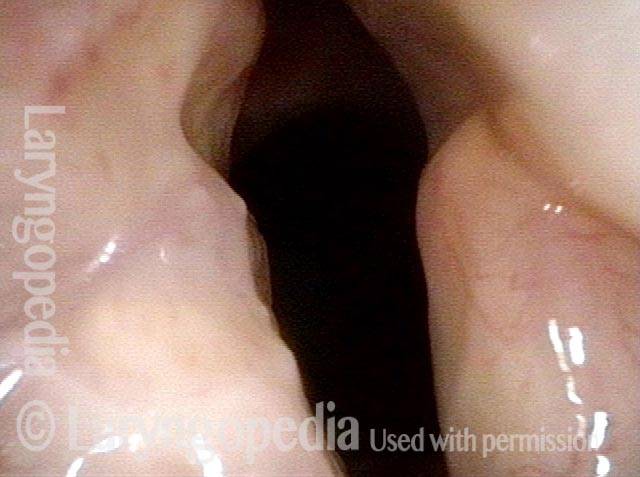
Evolution of the Wound after Laser Removal of a vocal Cord Cancer: Not Pretty at First, but Voice Result can be very Good
Vocal cord cancer (1 of 8)
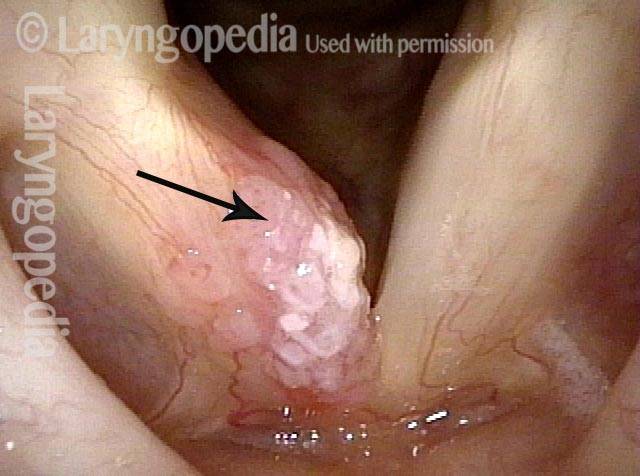
Voice-making with tumor (2 of 8)
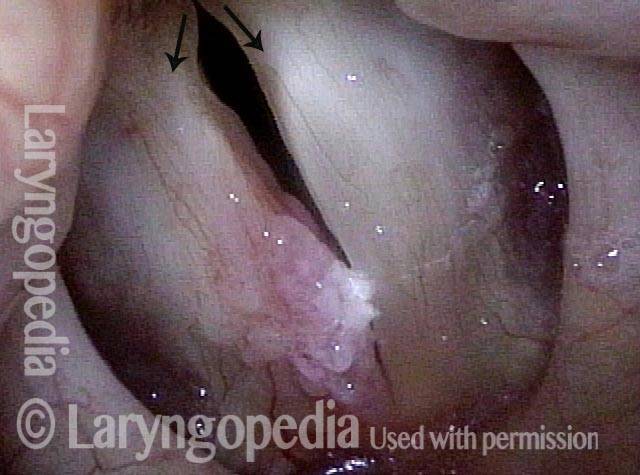
One week post-removal (3 of 8)
Voice-making, post-removal (4 of 8)
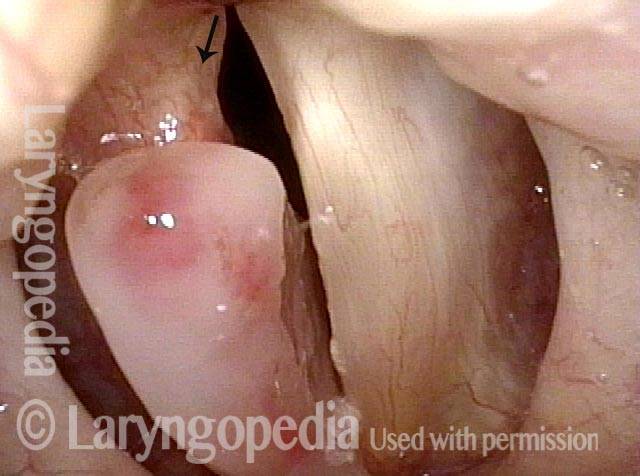
Six weeks post-op (5 of 8)
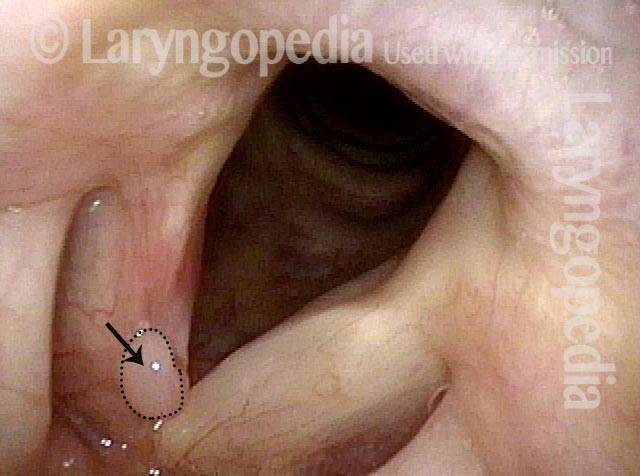
Voice-making, post-op (6 of 8)
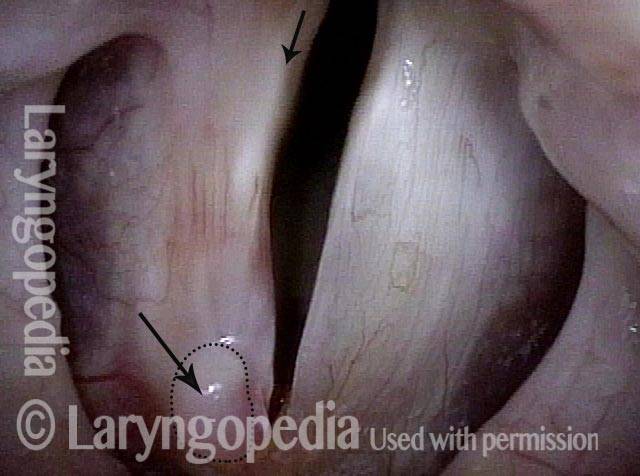
Four months post-op (7 of 8)
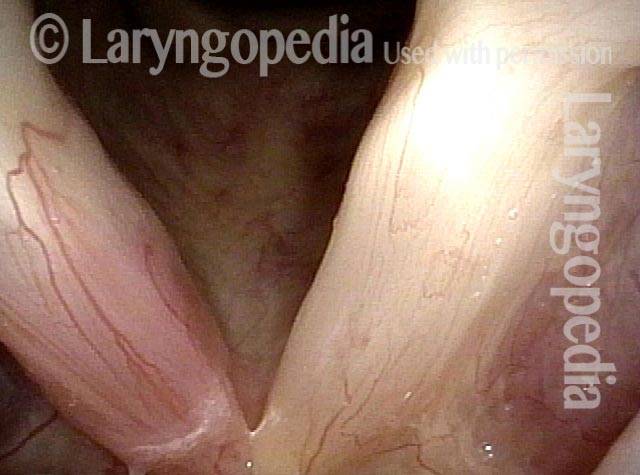
Voice-making, four months post-op (8 of 8)
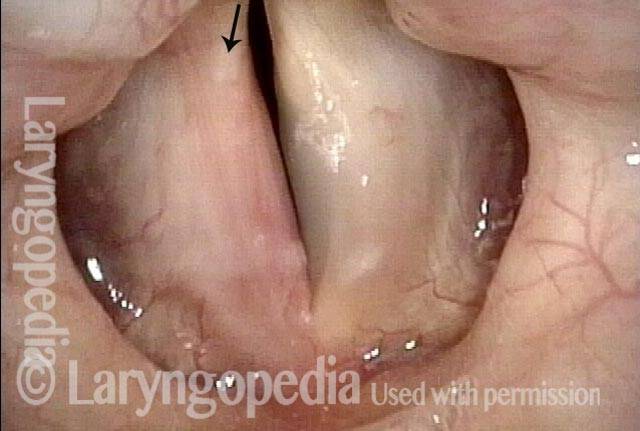
Laser can Beat Cancer and Spare Voice even after Radiotherapy Failure
Return of cancer (1 of 4)
Leukoplakia and Stippled Vascularity (2 of 4)
Post-laser excision (3 of 4)
Healing post-laser excision (4 of 4)
How a Vocal Cord Heals after Laser Removal of a Cancer
squamous cell carcinoma (1 of 6)
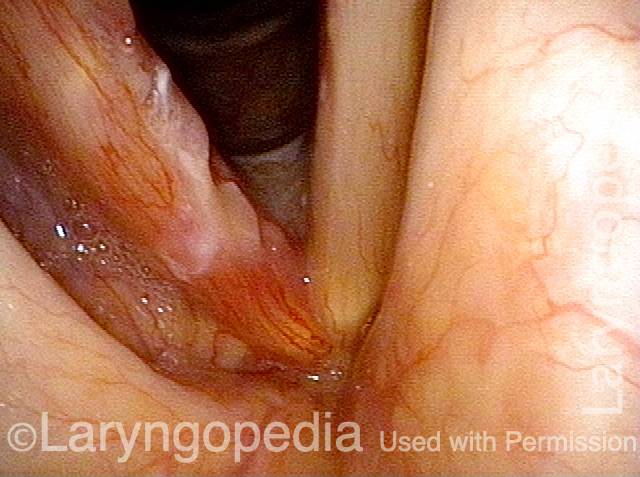
1 week after laser excision (2 of 6)
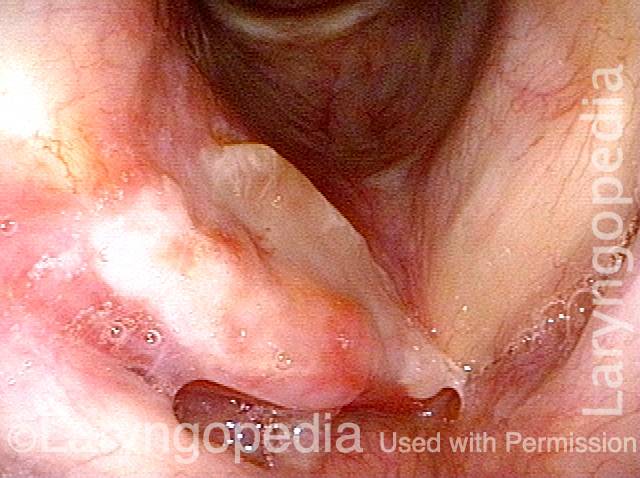
Difficulty speaking (3 of 6)
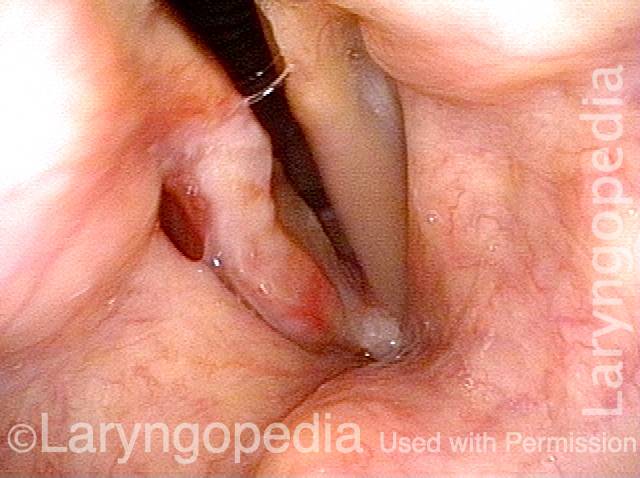
Natural granulation after laser excision (4 of 6)
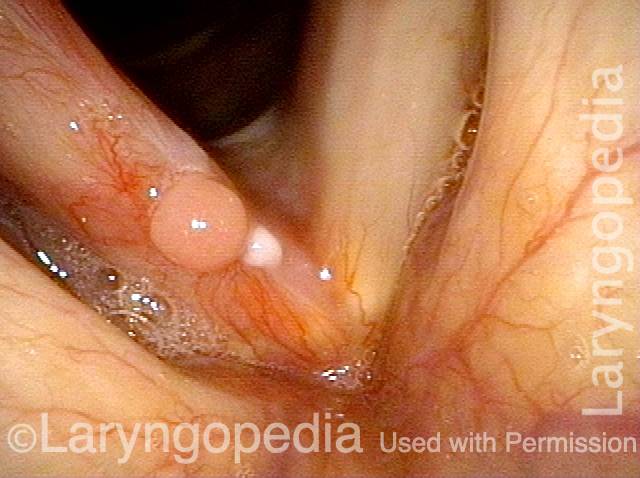
Abnormal capillary pattern (5 of 6)
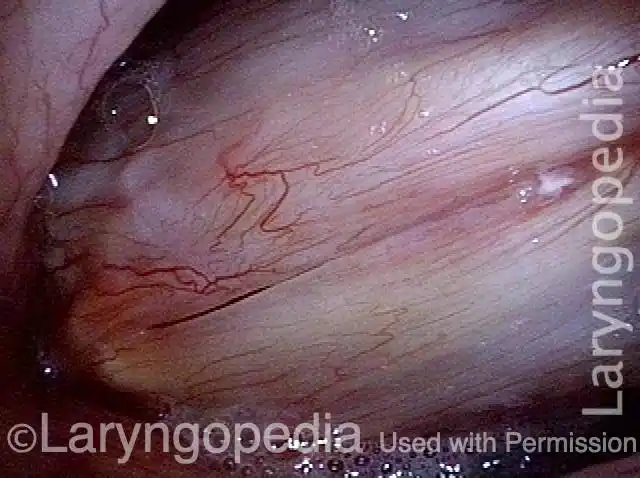
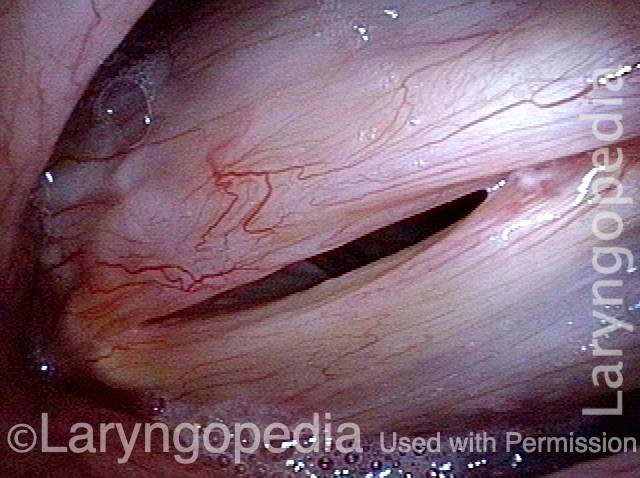
Stiff right vocal cord (6 of 6)

Share this article