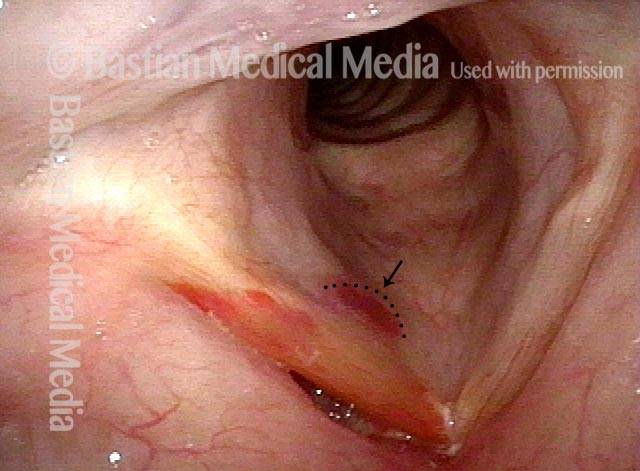

Vocal Cord Bruising (Hemorrhage)
Vocal cord bruising happens when tiny blood vessels (capillaries) in the vocal folds rupture, allowing blood to leak into the tissue. In addition to a visible bruise, this often causes sudden hoarseness and loss of upper voice.
Common triggers include aggressive or prolonged voice use such as yelling or extremely loud singing, forceful coughing, or a loud sneeze. Occasionally, there is no obvious cause in the patient’s memory, particularly when significant capillary ectasia is present.
There are two main types of vocal cord hemorrhage. To set up an analogy, think of a wet street after rain. If the pavement is new and smooth, with no low spots, the wet surface will dry quickly once the sun comes out. If, however, water collects in a pothole as a puddle, it may take much longer to evaporate—and this also indicates the need for street repair.
Returning to bruising, a superficial hemorrhage consists of a thin suffusion of blood very near the surface of the vocal fold (wet pavement). There is no change in the vocal fold margin, and vibration under strobe light can be normal, which explains why the voice is often only minimally affected. The bruise typically disappears rapidly.
If, on the other hand, there is ad “street puddle” of blood, like a micro–goose egg or “blood blister,” absorption occurs much more slowly. This type of hemorrhage may evolve into a polyp and can require removal of a residual lesion.
Initial Treatment
Once the type of bruising has been identified (thin suffusion versus blood blister or hemorrhagic polyp), the patient typically rests the voice for several days. Voice use should be minimal, though absolute voice rest is not usually necessary. Other general measures of voice care—such as good hydration and reflux management when present—are advisable.
A follow up visit can be useful within a short time if a superficial bruise, and the person can often resume voice use, including vocal performance, before all traces of the bruise have absorbed. A longer interval for reexamination makes sense for hemorrhagic polyps, since recovery is expected to take much longer.
After any vocal fold hemorrhage, follow-up examination is important, even if the voice becomes normal. The purpose is to look for an ectatic capillary, an abnormally enlarged surface blood vessel. These fragile vessels increase the risk of repeat hemorrhage and, if unidentified, may remain silent until another bruise occurs. For this reason, identification and prophylactic treatment, as described below, are strongly recommended.
If an ectatic capillary is found after resolution of the bruise, laser coagulation is often recommended, either in the office or the operating room. Commonly used lasers include CO₂, KTP, thulium, or blue laser systems. While the choice of laser is of some interest, the surgeon’s experience and judgment are more important; lasers tuned to the wavelength of hemoglobin (such as pulsed-KTP or blue laser) are theoretically ideal, but the CO₂ laser can also work very effectively.
If a blood blister becomes a persistent polyp, microsurgical removal may be needed. This is most often performed in the operating room, although in selected cases an office-based laser approach may be appropriate. With modern surgical techniques and an experienced surgeon, voice quality is almost always fully restored.
Prognosis Summary
Superficial bruises resolve rapidly without permanent damage. Blood blisters or hemorrhagic polyps recover more slowly and may require microsurgical repair, but in both cases, with expert care, outcomes are excellent, commonly returning the voice to its original capabilities.
A Vocal Cord Bruise that Could Happen to Anyone
While capillary ectasia (as seen in other photo series here) markedly increases vulnerability to vocal cord bruising, every human vocal cord has capillaries on its service, and even normal capillaries can leak and cause a bruise with sufficient vocal trauma. In this person, with an aggressive cough, her normal capillaries are the source of the bruise.
Bruised Vocal Cord (1 of 2)
Bruised Vocal Cord (2 of 2)
Vocal Cord Bruises (Hemorrhage) often Initially Obscure the Ectatic Capillary “Culprit”
A person can experience sudden hoarseness at a time of sustained heavy voice use, or even immediately following a “scream,” or even a loud sneeze. The explanation might be a bruise of a vocal cord. This can happen to anyone but is far more likely if the person has underlying capillary ectasia.
When a bruised vocal cord is seen, therefore, the question is: “Is this a fluke bruise that can happen to anyone, or is it one explained by capillary ectasia?” In this instance, the answer is yes to capillary ectasia.
Singer’s Bruised Vocal Cord (1 of 8)
Bruise under Strobe Light (2 of 8)
Abnormal capillary (3 of 8)
Bruise is gone (4 of 8)
Capillaries under narrow band light (5 of 8)
Capillaries touch during phonation (6 of 8)
Post-surgical repair (7 of 8)
Margins match (8 of 8)
Vocal Cord Bruise / Hemorrhage, Before and After Rest and Surgery
Vocal cord bruise / hemorrhage (1 of 4)
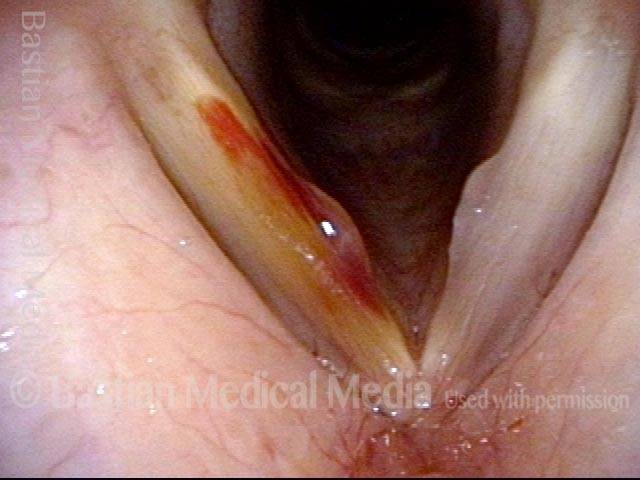
Vocal cord bruise / hemorrhage (2 of 4)
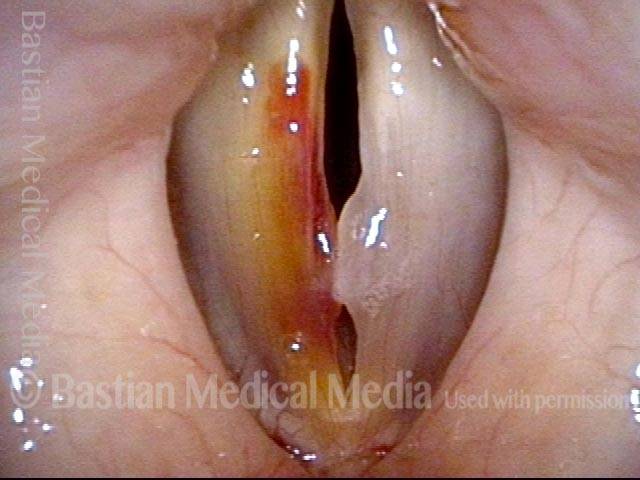
Vocal cord bruise / hemorrhage, after rest and surgery (3 of 4)
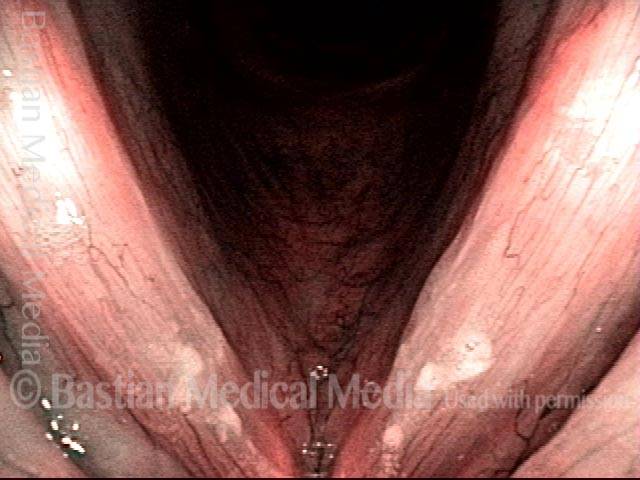
Vocal cord bruise / hemorrhage, after rest and surgery (4 of 4)
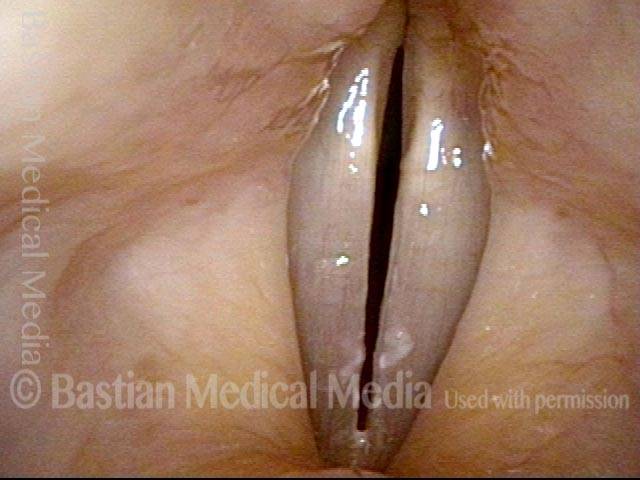
Vocal Cord Bruise / Hemorrhage
Vocal cord bruise / hemorrhage (1 of 2)
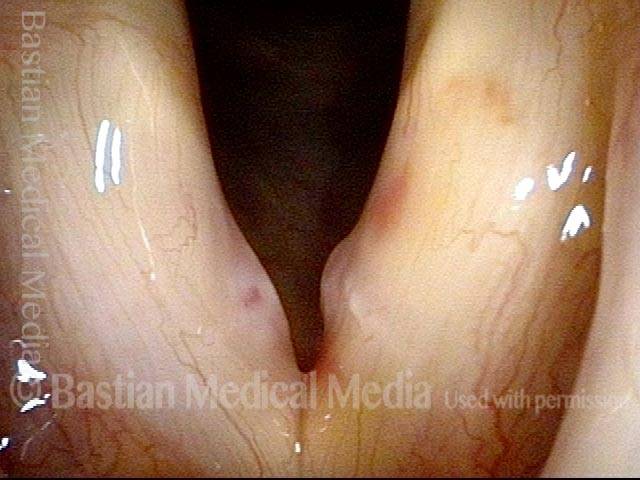
Vocal cord bruise / hemorrhage (2 of 2)
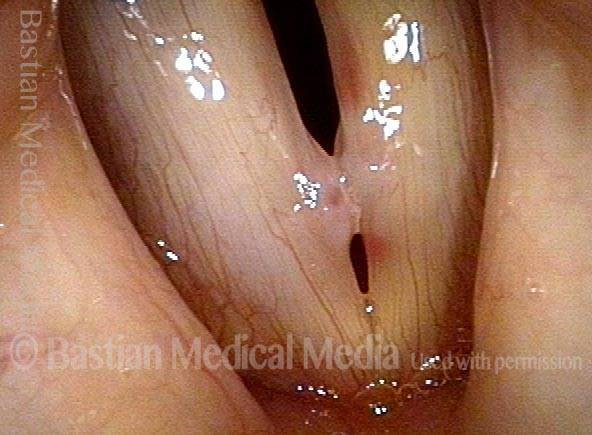
Vocal Cord Bruise / Hemorrhage, Before and After Rest
Vocal cord bruise / hemorrhage (1 of 6)
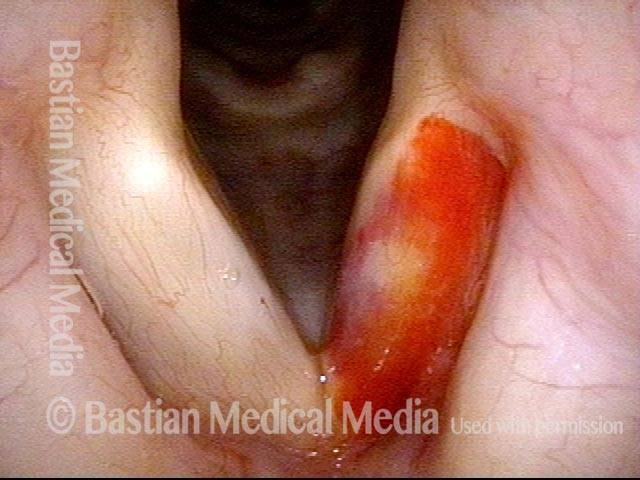
Vocal cord bruise / hemorrhage (2 of 6)
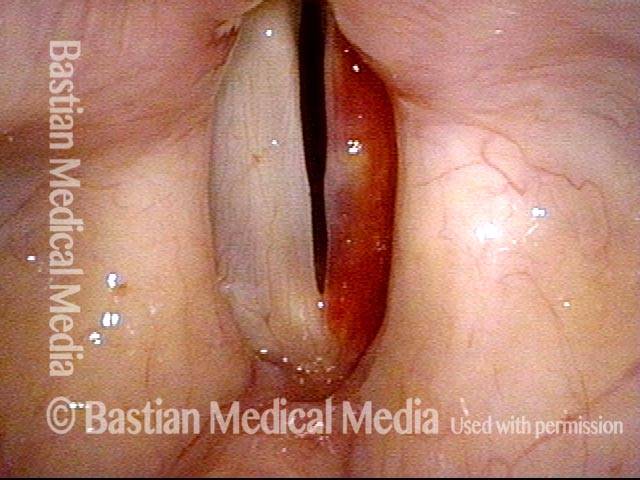
Vocal cord bruise / hemorrhage (3 of 6)
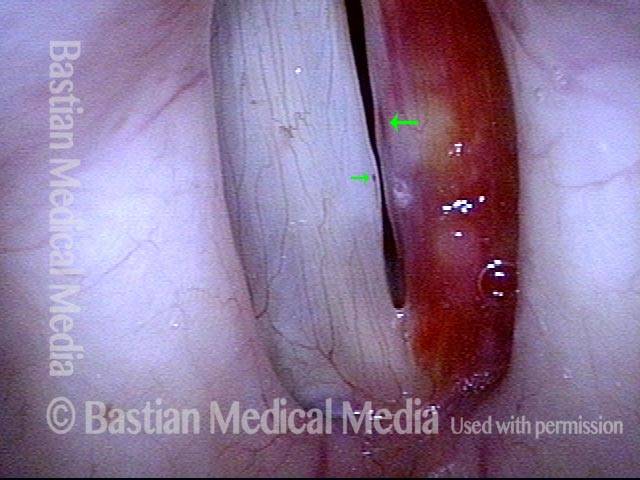
Vocal cord bruise / hemorrhage: after 2 weeks of rest (4 of 6)
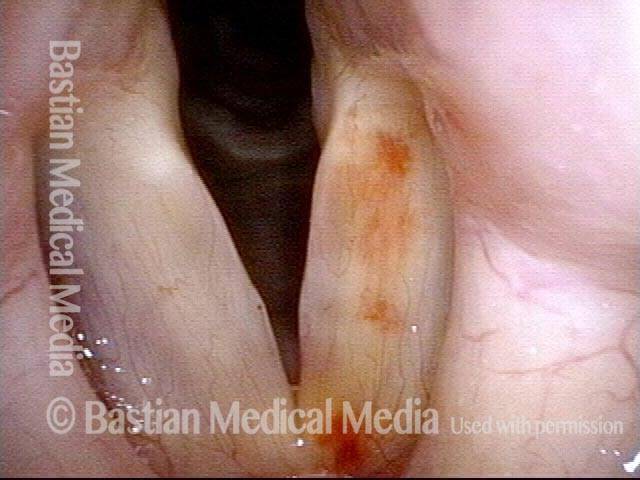
After 2 weeks of rest (5 of 6)
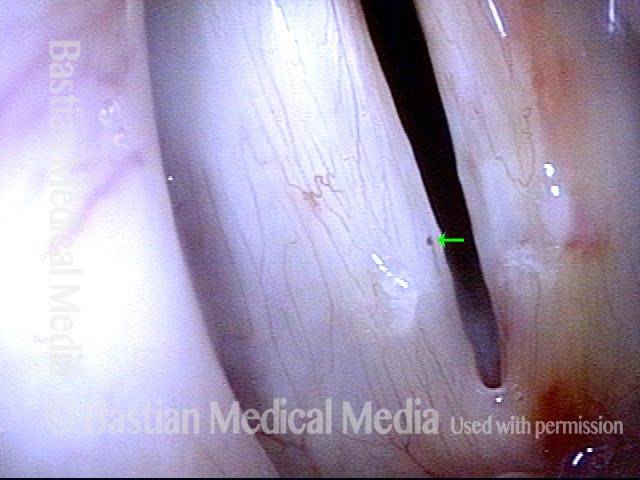
After 2 weeks of rest (6 of 6)
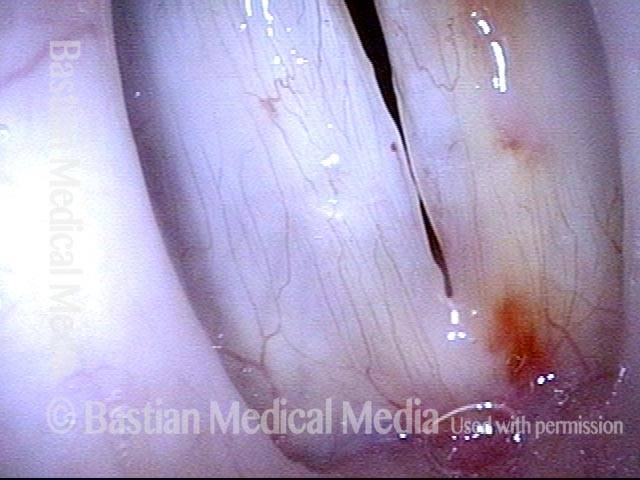
Bruise Caused by Cough
Closer view of bruise (2 of 2)
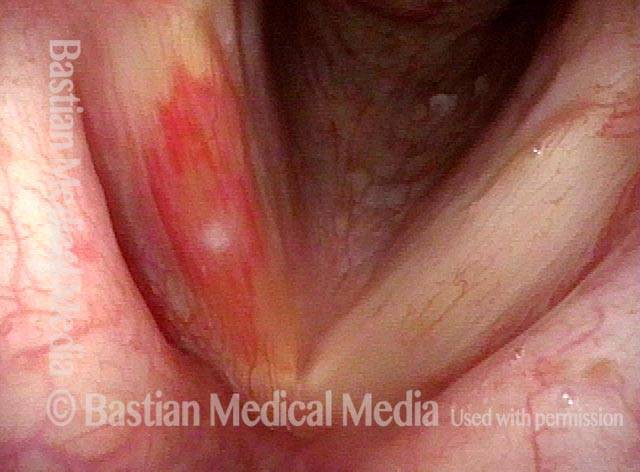
Bruise caused by violent coughing (1 of 2)
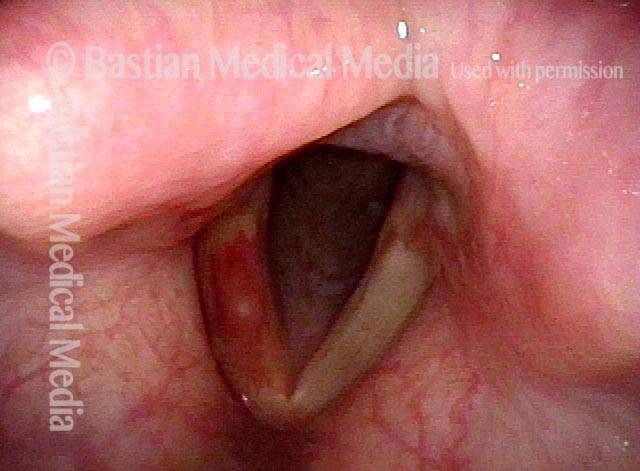
Closer view of bruise (2 of 2)
Vocal Cord Bruising From Coughing
Bruise from coughing (1 of 3)
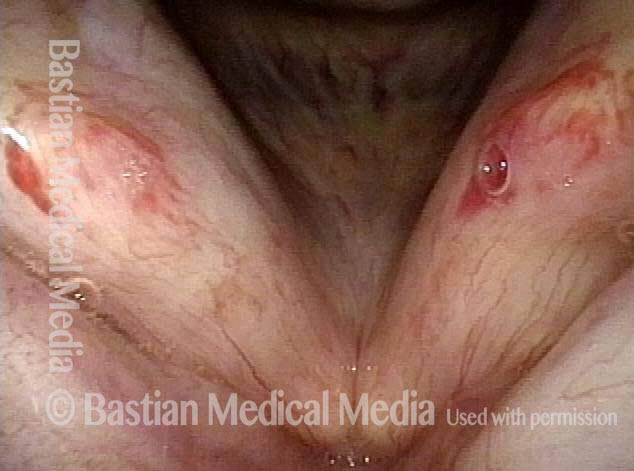
Pre-phonatory instant (2 of 3)
Phonation (3 of 3)
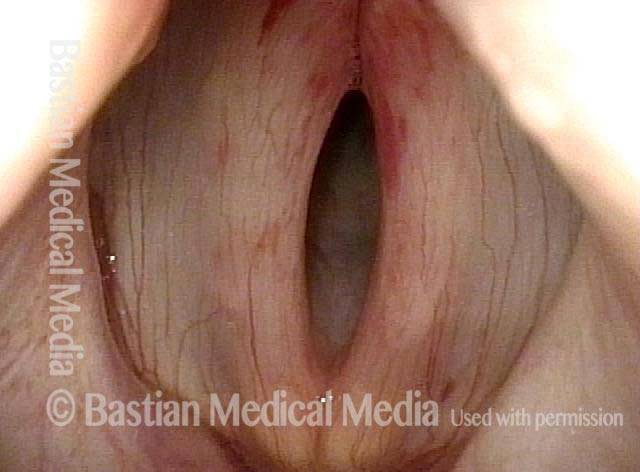
Phonation (3 of 3)
The Evolution of Vocal Cord Bruising and Emergence of a Vulnerable Capillary
Margin swelling and bruising (1 of 2)
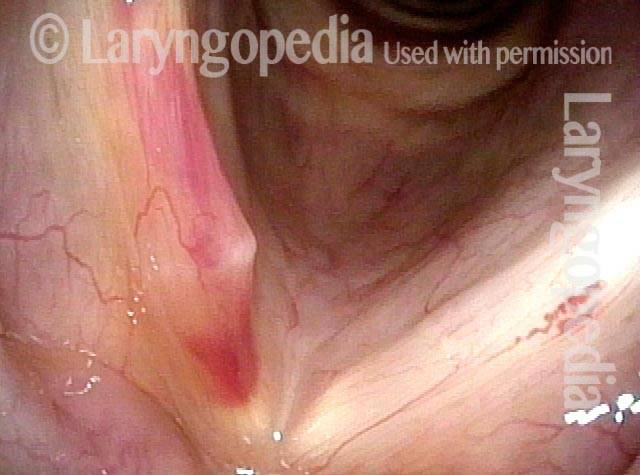
Six weeks later (2 of 2)
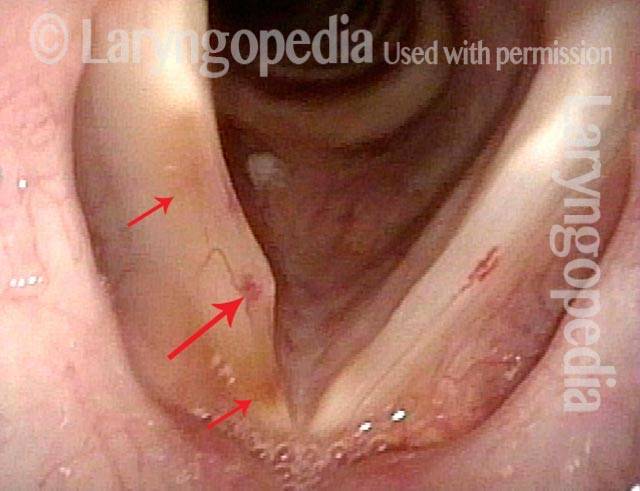
Resources for Further Reading
Bastian, R.W. (2015). Cummings Otolaryngology—Head & Neck Surgery, 899-927. Elsevier/Saunders. ISBN-13: 978-1455746965
Cordano VP, Alvarez ML, Cabrera JM, Napolitano CA. Acute vocal fold hemorrhage: retrospective analysis in a voice unit. J Voice. 2025;S0892-1997(25)00023-X.
Clark CM, Sulica L, et al. Current management of vocal fold hemorrhage: a survey of American Broncho-Esophagological Association members. J Voice. 2025;S0892-1997(25)00046-3.
Azadeh Ranjbar, P., Maxwell, P. J., Barna, A., Balouch, B., Hawkshaw, M., Al Omari, A. I., Lyons, K., Alnouri, G., & Sataloff, R. T. (2025). An Exploration of the Risk Factors, Severity, and Sequelae of Vocal Fold Hemorrhage in a Population of Voice Patients Before and After Diagnosis. Journal of voice : official journal of the Voice Foundation, 39(6), 1584–1593.
Lennon, C. J., Murry, T., & Sulica, L. (2014). Vocal fold hemorrhage: factors predicting recurrence. The Laryngoscope, 124(1), 227–232.
Klein, A. M., Lehmann, M., Hapner, E. R., & Johns, M. M., 3rd (2009). Spontaneous resolution of hemorrhagic polyps of the true vocal fold. J Voice. 23(1), 132–135.
Share this article
Nodules and Other Vocal Cord Injuries: How They Occur and Can Be Treated
This video explains how nodules and other vocal cord injuries occur: by excessive vibration of the vocal cords, which happens with vocal overuse. Having laid that foundational understanding, the video goes on to explore the roles of treatment options like voice therapy and vocal cord microsurgery.