Falsetto register is a term that is applied especially to men to the high “feminine” quality sound available to most above the chest (normal speaking) register. Some call this head register. Falsetto is used in some countertenor voices and, in other cases, for comic effect. Some use “falsetto” as a term to denote the voice quality above the first break, whether in the male or female voice. This is the quality used by female classical singers, as compared with a more intense chest voice phonation used in most popular styles. The language and concepts used to describe vocal registers vary widely; hence, care is warranted so as to not take any single definition, such as ours, too seriously!
Falsetto vs Chest Registers at the Same Pitch—This is Worth Careful Study

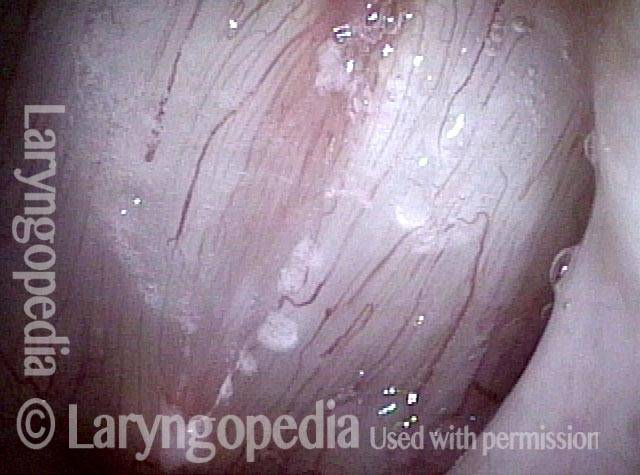
Falsetto register (1 of 6)
A 20-something man with puberphonia. Here, in distant view, he is in falsetto register at F#3 (185 Hz). His low falsetto is, by the way, remarkably stable and capable. Compare the vibratory blur with the next photo.
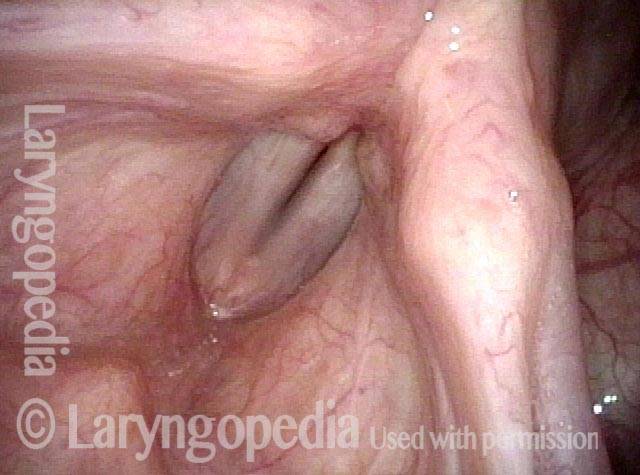
Chest register (2 of 6)
At virtually the same pitch, but now in chest register. Firmer closure (and longer closed phase of vibration explains the more-adducted blur as compared with photo 1.
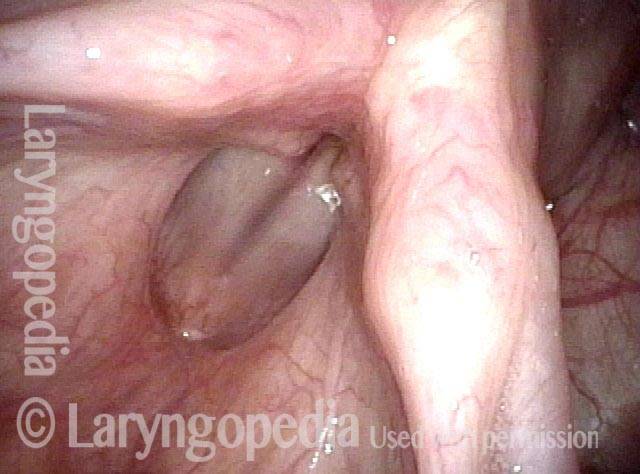
Falsetto, open phase (3 of 6)
Now back to falsetto register under strobe light, and with better magnification. This is open phase of vibration also at F#3. Note the single, thinned "leading edge" of each fold.
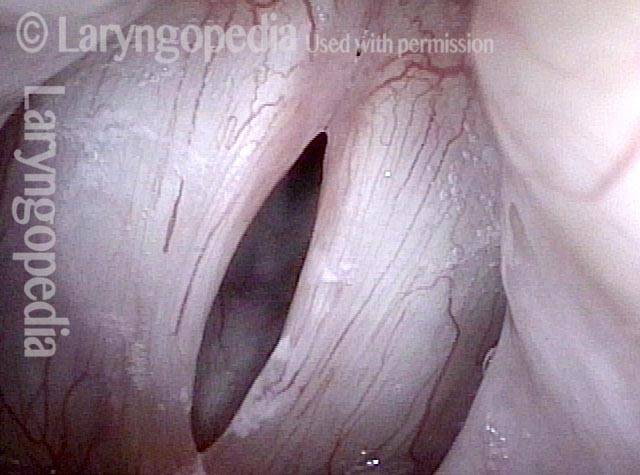
Falsetto, "closed" phase (4 of 6)
Closed phase at the same pitch isn't in fact fully closed, and the "closed" phase of vibration is also shorter than in photo 6.
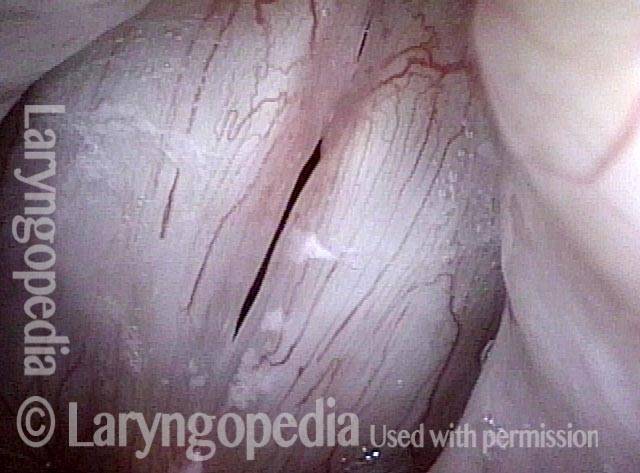
Chest, open phase (5 of 6)
Open phase of vibration at the same pitch, but in chest register. Note the fatter, grey vocal cord margin. Compare with photo 3.
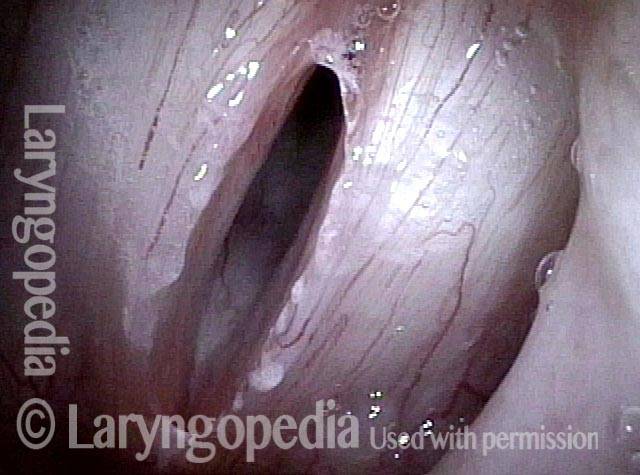
Chest, closed phase (6 of 6)
Closed phase still in chest register is fully closed and it takes longer for the vocal cords to part for the next vibration; that is, the closed phase of vibration is longer. Tighter closure and longer closed phase explain why the blur between the cords seen in photo 2 is different than in photo 1.