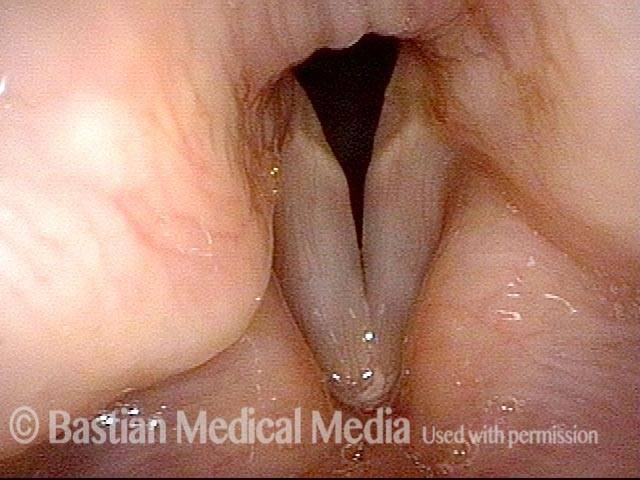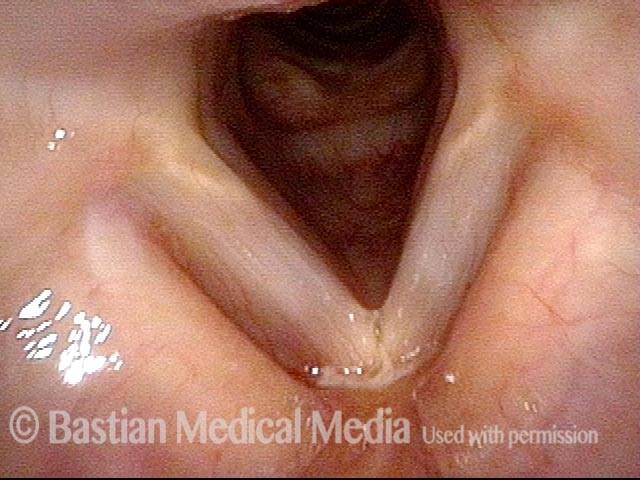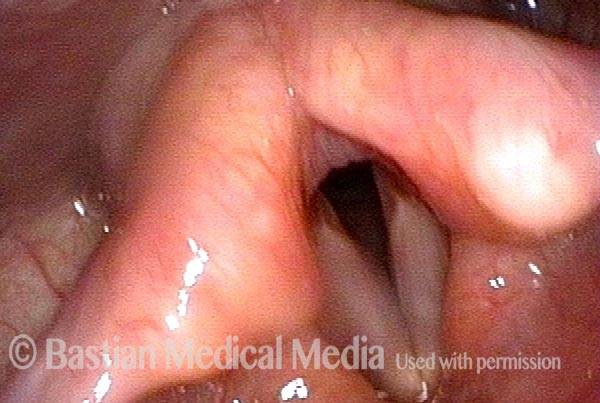
Vocal Cord Dysfunction (VCD): Why the Term Should Be Abandoned
Vocal cord dysfunction (VCD) has become a useless term in laryngology because it is defined differently by different clinicians. It has been used to mean:
- a voice disorder,
- a breathing disorder,
- a cough disorder, or
- laryngospasm,
- or some combination of the above.
As a result, “VCD” functions as a catch-all diagnosis, blurring together heterogeneous conditions that should instead be carefully distinguished.
If a clinician states, “This patient has VCD,” the natural reply would be: “Do you mean an abnormal voice? Breathing difficulty? Cough? Laryngospasm?” The phrase is about as unhelpful as saying, “The man traveled in a conveyance.” One must ask: “By plane? Car? Train? Motorcycle?”
Four Ways “VCD” Is Used
(abstracted from common online usage by artificial intelligence)
VCD as a Voice Disorder:
Paradoxical vocal fold movement disrupts normal voicing, producing episodes of dysphonia, voice breaks, or inability to sustain phonation.
VCD as a Breathing Disorder:
Vocal folds close inappropriately during respiration (usually on inspiration), causing episodic upper-airway obstruction with shortness of breath, throat tightness, and noisy inhalation (stridor).
VCD as a Cough Disorder:
Paradoxical vocal fold closure and laryngeal hypersensitivity trigger cough in response to minimal stimuli such as talking, laughing, odors, temperature change of ambient air, touching a spot on the neck, etc.
VCD as Laryngospasm:
Episodic, inappropriate adduction of the vocal folds during respiration, producing partial or near-complete airway obstruction — essentially laryngospasm called VCD instead.
In all four cases, paradoxical or inappropriate vocal fold motion is the proposed finding, but the phenomenology differs: voice change, impaired breathing, cough, or laryngospasm.
Sorting Out Mechanism vs. Use
Logic suggests that each expression of “VCD” could have either:
- a neurological/neuromuscular cause, or
- a behavioral / nonorganic cause (i.e., “software, not hardware”).
Voice disorder “VCD”
- Neurological differential: laryngeal dystonia (spasmodic dysphonia), ALS, paresis/paralysis, myoclonus, etc.
- Nonorganic: consciously or subconsciously manipulated voice production (malingering for external gain; somatization or factitious disorder for psychological benefit).
- Distinction: usually straightforward via Part II of the Integrative Diagnostic Model — modeling, elicitation, trial therapy, and judging patient response.
Breathing disorder “VCD”
- Neurological differential: respiratory dystonia, paresis/paralysis, neuromuscular disease.
- Nonorganic: secondary gain–related breathing disturbances (seen in young athletes, for example).
- Clues: inspiratory noise (not expiratory, as in asthma); may peculiarly have been treated as asthma, sometimes for years before correct diagnosis.
Cough disorder “VCD”
- Neurologic diagnosis via syndrome match: sensory neuropathic cough is usually a prima facie diagnosis once pulmonary causes are ruled out.
- Nonorganic cough — typically unimodal, perfunctory, predictable, distractible, with cognitive dissonance and peculiar serenity (“la belle indifférence”).
Laryngospasm “VCD”
- Neurological diagnosis: a sensory hyperexcitability disorder, clearly recognizable long before “VCD” became a diagnosis in vogue. The clinical scenario is clear and the diagnosis should be simply … laryngospasm! An abrupt, terrifying triggering of the laryngeal closure reflux that lasts from a few seconds to (most commonly) about a minute, and rarely, 90 seconds.
- Nonorganic? not yet documented as nonorganic; malingering unlikely.
Clinical Bottom Line
Neurogenic vs. psychogenic: With rapport and skilled elicitation of diverse vocal and breathing tasks, clinicians can nearly always separate the two.
Recommendation: The term “VCD” should be abandoned. It obscures rather than clarifies, groups disparate phenomena together, and fails the test of diagnostic precision.
Share this article